
Quick Summary: NSFW AI prompts are specialized text instructions that guide AI models to generate adult-oriented images, videos, or chat responses. The best prompts in 2026 balance detailed descriptions with ethical considerations, focusing on artistic style, lighting, pose details, and atmosphere rather than explicit language alone. Effective prompt engineering requires understanding model capabilities, using descriptive language, and respecting platform policies.
The landscape of the NSFW AI generation has evolved dramatically. What started as experimental technology now produces results that rival professional photography and illustration. But here’s the catch—quality output demands quality input.
Generic prompts produce generic results. Blurry edges, awkward proportions, unnatural lighting—these problems plague amateur attempts. The difference between mediocre and exceptional NSFW AI content comes down to prompt engineering.
This guide covers tested prompt strategies for 2026, focusing on what actually works across major platforms. No fluff, no outdated techniques. Just practical approaches backed by real-world testing.
What Makes NSFW AI Prompts Different
NSFW prompts require more precision than standard AI instructions. The models need clear guidance on anatomy, positioning, lighting, and atmosphere—elements that determine whether output looks professional or amateur.
Standard prompts might work for landscapes or product shots. Adult content generation demands a different skillset. The AI needs explicit direction about composition, style references, and technical details that casual users often overlook.
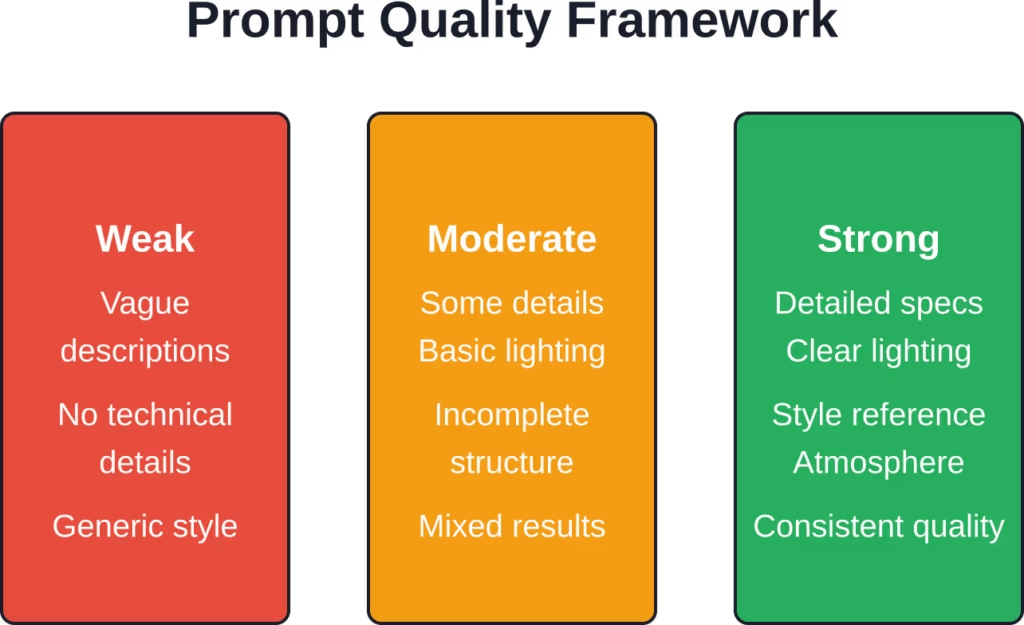
Here’s what separates effective NSFW prompts from weak ones: specificity. Rather than vague descriptions, successful prompts include artistic style references, lighting conditions, camera angles, and atmospheric details. Think photography direction, not casual conversation.
Core Components of Effective Prompts
Every strong NSFW prompt contains several key elements. Subject description comes first—physical characteristics, positioning, expression. Next comes environmental context: setting, lighting, time of day. Finally, technical specifications: camera angle, artistic style, rendering quality.
According to testing across multiple platforms in 2026, prompts structured with these components consistently outperform loosely-worded alternatives. The AI interprets structured information more accurately than rambling descriptions.
| Prompt Element | Purpose | Example |
|---|---|---|
| Subject Details | Define appearance and pose | “athletic figure, confident pose” |
| Lighting | Set mood and depth | “soft window light, golden hour” |
| Style Reference | Guide artistic approach | “cinematic photography, film grain” |
| Atmosphere | Establish context | “intimate bedroom setting, morning” |
| Technical Specs | Control quality and angle | “85mm lens, shallow depth of field” |
Tested NSFW Prompt Techniques for 2026
Real talk: not all prompt strategies work equally well. Testing reveals consistent patterns in what produces quality results versus what generates disappointing output.
Photography-Style Prompting
Treating the AI like a camera operator yields remarkably better results. Instead of describing what someone “is,” describe what the camera “sees.” This shift in perspective helps the AI understand composition and framing.
Example structure: “Medium shot of [subject], soft backlighting from window, warm color temperature, shallow focus on face, bedroom interior, morning atmosphere, shot on 50mm lens, photorealistic rendering.”
This approach borrows from professional photography. The AI responds to technical language because its training data includes millions of images with similar metadata descriptions.
Artistic Style References
Mentioning specific art movements or photography styles dramatically improves output consistency. Rather than letting the AI guess at aesthetic preferences, reference concrete styles it recognizes from training data.
Effective style references include: “film noir lighting,” “Renaissance painting composition,” “fashion photography aesthetic,” “impressionist color palette,” or “cinematic color grading.” These terms carry specific visual meanings the AI understands.
Negative Prompting Strategy
What to exclude matters as much as what to include. Negative prompts tell the AI what to avoid—distorted anatomy, poor lighting, unwanted elements. Most advanced generators in 2026 support negative prompt fields.
Common negative prompt elements: “blurry, distorted, bad anatomy, extra limbs, poor lighting, oversaturated, cartoonish, low quality, artifacts, watermark.” These terms help the model avoid common generation failures.
Platform-Specific Considerations
Different platforms handle NSFW prompts differently. Some require workarounds, others accept direct language. Understanding platform capabilities prevents wasted time and frustration.
Community discussions across various forums highlight that uncensored platforms typically produce better results for adult content because they’re specifically trained on relevant datasets. Mainstream platforms with content filters often struggle with anatomy accuracy when generating NSFW material.
Uncensored AI Generators
Platforms designed for adult content accept explicit prompts without restrictions. These tools typically offer better anatomical accuracy and accept direct language about poses and composition.
When using uncensored generators, prompt clarity matters more than euphemisms. The AI understands direct descriptions better than coded language. Be specific about positioning, angles, and interaction rather than relying on suggestive hints.
Working Within Content Filters
Some platforms implement safety filters while still allowing artistic nudity. Success on these platforms requires focusing prompts on artistic merit—lighting, composition, classical art references—rather than explicit content.
Frame prompts around photography or fine art contexts. Terms like “figure study,” “artistic portrait,” and “classical composition” signal artistic intent to content filters while still producing desired results.
Build Custom AI Characters With Cherrypop AI
For readers exploring character-based AI prompts, Cherrypop AI gives them a place to create a character, shape its personality, and generate visual content around it. Cherrypop AI is an AI character platform where users can chat with AI characters, create custom companions, and generate images or videos. For people working with AI character prompts, Cherrypop AI can help test character ideas, visual styles, and scene concepts in one place instead of using separate tools for chat, character setup, and generation.
Cherrypop AI can help with:
- creating custom AI characters
- setting character personality and background
- chatting with AI characters
- generating character-based images and videos
👉Try Cherrypop AI to create and generate your own AI character concepts.
NSFW Roleplay Prompt Engineering
Chatbot platforms require different prompt strategies than image generators. Conversational AI responds to scenario setup, character definition, and narrative context rather than visual descriptions.
According to platform documentation and user experiences shared in community discussions, effective roleplay prompts establish clear scenarios, define character personalities, and set boundaries upfront. This structure helps the AI maintain consistent characterization throughout extended conversations.
Scenario-Based Prompts
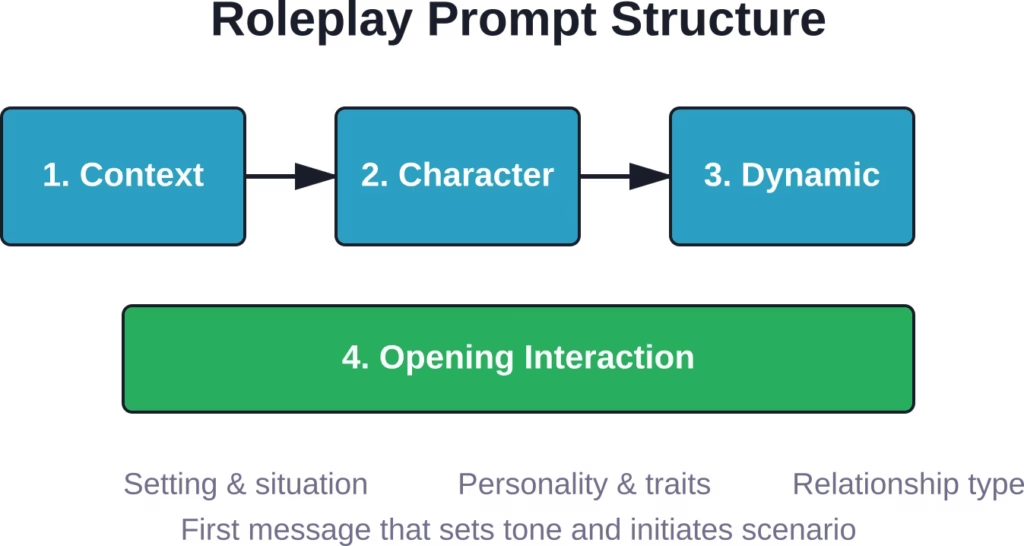
Strong roleplay prompts establish context before diving into interaction. Set the scene, define the relationship dynamic, and clarify the tone. This foundation prevents the AI from making incorrect assumptions about the scenario.
Example structure:
- Scenario: [context and setting]
- Character: [personality traits and background]
- Dynamic: [relationship type and power balance]
- Tone: [playful/serious/romantic]
Character Consistency Techniques
Maintaining character personality across long conversations requires upfront definition. Include personality traits, speech patterns, and behavioral tendencies in the initial prompt. The AI uses these details as reference points throughout the interaction.
Successful character prompts describe how someone acts, not just who they are. “Confident and teasing, uses playful language, maintains eye contact” works better than “attractive person.” Behavioral cues guide AI responses more effectively than static descriptions.
Ethical and Safety Considerations
Responsible use of NSFW AI tools requires awareness of ethical boundaries and platform policies. The technology carries potential for misuse that responsible users should actively avoid.
According to Anthropic’s user safety documentation (published March 16, 2026), the company introduces specific safety features such as detection models, safety filters on prompts, and enhanced safety filters to mitigate harms like misinformation, objectionable content, or hate speech based on their Usage Policy.
Consent and Representation
Never attempt to recreate real individuals without explicit permission. Creating AI-generated adult content of specific people violates privacy and potentially breaks laws in many jurisdictions. Stick to original fictional characters or generic descriptions.
Most platforms explicitly prohibit generating content that resembles real people in their terms of service. Violating these terms risks account termination and potential legal consequences depending on local regulations.
Age and Legal Compliance
All subjects in NSFW AI content must be clearly adult. Avoid any prompts that could be interpreted as depicting minors, even in fictional contexts. Responsible platforms implement safeguards against such content, but user responsibility remains paramount.
Legal frameworks around AI-generated adult content continue evolving. As of 2026, regulations vary significantly by jurisdiction. Check local laws before creating or sharing NSFW AI content.
Platform Terms of Service
Each platform maintains specific rules about acceptable content. Read terms of service before using any NSFW AI generator. Violating platform rules can result in permanent bans and loss of access.
Some platforms allow artistic nudity but prohibit explicit sexual content. Others permit full NSFW generation but restrict certain scenarios or fetishes. Understanding these boundaries prevents wasted effort on prompts the platform will reject.
Advanced Prompt Optimization Techniques
Once basic prompting works consistently, advanced techniques push quality further. These methods require more experimentation but produce noticeably superior results.
Weighted Prompt Elements
Many generators support emphasis syntax that tells the AI which prompt elements matter most. Parentheses, brackets, or numerical weights (depending on platform) increase attention to specific details.
Example: “(soft lighting:1.3), gentle expression, bedroom setting, (intimate atmosphere:1.2), photorealistic” tells the AI to prioritize lighting and atmosphere over other elements. This granular control helps when certain aspects consistently render poorly.
Iterative Refinement Process
Professional results come from iteration, not single attempts. Generate multiple variations, identify what works, then refine prompts to emphasize successful elements while eliminating problematic ones.
Track which prompt components produce desired results. Build a personal library of effective phrases, style references, and technical specifications. This reference collection speeds up future prompt creation and improves consistency.
| Common Issue | Prompt Solution | Example Addition |
|---|---|---|
| Blurry results | Add quality modifiers | “sharp focus, highly detailed, 4K quality” |
| Poor lighting | Specify light source and type | “soft window light, golden hour, rim lighting” |
| Awkward anatomy | Reference photography terms | “natural pose, proper proportions, realistic anatomy” |
| Wrong atmosphere | Add mood descriptors | “intimate mood, warm tones, cozy setting” |
Style Mixing Strategies
Combining multiple artistic references creates unique aesthetics. Rather than copying a single style, blend elements from different approaches for original results.
Example: “Film noir lighting, Renaissance composition, modern fashion photography aesthetic” merges three distinct visual styles into something new. The AI synthesizes these influences into cohesive output that stands apart from generic generations.
Common Prompt Engineering Mistakes
Certain errors plague beginners and intermediate users alike. Avoiding these pitfalls improves results immediately without requiring advanced techniques.
Overloading Prompts
More words don’t equal better results. Excessively long prompts confuse the AI rather than helping it. Each additional detail dilutes the impact of previous elements unless properly weighted.
Keep prompts focused. Include 5-8 key descriptive elements plus technical specifications. If prompts exceed 100 words, they’re probably overloaded. Trim redundant descriptions and focus on impactful details.
Conflicting Instructions
Asking for “dramatic dark lighting” and “bright sunny atmosphere” in the same prompt creates confusion. The AI attempts to satisfy both requirements, typically producing unsatisfactory compromise results.
Review prompts for contradictions before generating. Ensure lighting, mood, style, and technical specifications align toward a coherent vision rather than pulling in different directions.
Ignoring Negative Prompts
Many users skip negative prompts entirely, then wonder why results contain common generation artifacts. Specifying what to avoid is as important as describing what to include.
Build a standard negative prompt template that addresses typical issues for your preferred platform. Apply it to every generation, then customize based on specific needs for individual prompts.
Measuring Prompt Effectiveness
Systematic testing reveals which prompt strategies actually work versus which merely sound good in theory. Track results to build evidence-based prompting skills.
A/B Testing Approach
Generate the same concept with two different prompt structures. Compare results objectively: which has better composition, lighting, anatomy, atmosphere? This direct comparison highlights what works.
Change one variable at a time. Test lighting descriptions separately from pose instructions separately from style references. Isolating variables identifies which specific elements improve output quality.
Building a Prompt Library
Document successful prompts for future reference. Organize by category: lighting setups, artistic styles, pose descriptions, atmosphere elements. This personal database becomes increasingly valuable over time.
Note which platforms each prompt works best on. Generators have different strengths—a prompt that excels on one platform might underperform on another. Platform-specific documentation improves efficiency.
Conclusion
Mastering NSFW AI prompts comes down to treating the process like professional content creation. Detailed technical specifications, artistic references, and systematic refinement separate exceptional results from mediocre output.
The techniques covered here—photography-style prompting, negative prompts, iterative testing, and ethical awareness—form the foundation of effective NSFW AI generation in 2026. Platform capabilities continue evolving, but these core principles remain constant.
Start with structured prompts that include subject details, lighting, style references, and atmosphere. Test systematically. Build a personal library of successful prompt components. And always maintain ethical boundaries around consent, age representation, and platform policies.
The technology will advance. Prompt engineering strategies that work today might need adjustment tomorrow. But the fundamental approach—precision, iteration, and responsibility—remains the path to consistently excellent NSFW AI content.
Check platform documentation regularly for updated capabilities and policies. Join community discussions to learn from others’ experiences. And remember: quality prompts require practice, not perfection on the first attempt.
Frequently Asked Questions
NSFW AI prompts are text instructions that guide artificial intelligence models to generate adult-oriented content, including images, videos, or conversational responses. These prompts contain descriptions of subjects, settings, artistic styles, and technical specifications that the AI interprets to create the requested content. Effective NSFW prompts balance detailed descriptions with ethical considerations and platform guidelines.
NSFW prompts require more precision regarding anatomy, positioning, lighting, and composition compared to standard AI instructions. They demand specific technical language about camera angles, artistic styles, and atmospheric details that general prompts can omit. Additionally, NSFW prompts must navigate platform content policies and ethical boundaries that don’t apply to most other AI generation tasks.
Legality depends on jurisdiction and specific use cases. Most regions permit AI-generated adult content for personal use, provided all subjects are clearly adults and no real individuals are depicted without consent. However, laws vary significantly by location, and some jurisdictions impose restrictions on certain types of content. Always verify local regulations and platform terms of service before creating or sharing NSFW AI content.
Uncensored platforms specifically designed for adult content typically produce the most accurate results because they’re trained on relevant datasets. Community discussions consistently indicate that mainstream platforms with content filters struggle with anatomical accuracy in NSFW contexts. For current platform recommendations, check specialized forums and review sites, as platform capabilities and policies change frequently.
Structure prompts like photography direction, including subject details, lighting specifications, artistic style references, and technical camera settings. Use negative prompts to exclude common generation failures like distorted anatomy or poor lighting. Test prompt variations systematically, documenting what works for future reference. Focus on specificity over length—5-8 detailed elements outperform lengthy rambling descriptions.
Never create AI-generated adult content of real individuals without explicit permission, as this violates privacy and potentially breaks laws. Ensure all generated subjects are clearly adults. Respect platform terms of service and content policies. Consider the potential impact of generated content and avoid creating material that could cause harm or perpetuate stereotypes. Responsible use requires ongoing awareness of both technical capabilities and ethical boundaries.
Yes, but chatbot prompts require different structures than image generation prompts. Focus on scenario setup, character personality definition, relationship dynamics, and behavioral traits rather than visual descriptions. Establish context upfront to maintain consistency throughout conversations. Many platforms designed for AI companionship specifically support NSFW roleplay, though capabilities and restrictions vary by service.
Leave a Reply