
Resumen rápido: La creación de contenidos para adultos generados por IA implica el uso de redes neuronales especializadas y plataformas de IA generativa, pero hacerlo plantea graves problemas legales, éticos y de seguridad. Desde mayo de 2025, la Ley Take It Down tipifica como delito federal la publicación a sabiendas de imágenes sexualmente explícitas -reales o generadas por IA- sin consentimiento, y los infractores se enfrentan a sanciones penales. Más allá de los riesgos legales, la creación de pornografía deepfake no consentida causa graves daños psicológicos a las víctimas y perpetúa problemas sociales más amplios en torno a la privacidad y la explotación digital.
El panorama de los medios sintéticos se ha transformado radicalmente. Lo que antes requería estudios de Hollywood y presupuestos de $800.000 para una secuencia CGI de 10 minutos, ahora puede lograrse en casa con hardware de consumo y software de código abierto.
Pero el hecho de que la tecnología exista no significa que su uso sea legal, ético o esté exento de consecuencias.
El rápido avance de la tecnología deepfake ha elevado significativamente el realismo y la accesibilidad de los contenidos pornográficos generados por IA. La inteligencia artificial puede ahora convertir fotos en material deepfake explícito con una facilidad alarmante, creando lo que los investigadores describen como “una contienda desigual” entre las capacidades de síntesis y de detección.
Esta guía examina los mecanismos técnicos que subyacen a la generación de vídeos porno con IA, el marco jurídico actual que regula estos contenidos, los métodos de detección y las profundas implicaciones éticas que acompañan a esta tecnología.
La tecnología detrás de los contenidos para adultos generados por inteligencia artificial
Para entender cómo se crean los vídeos porno de IA es necesario examinar las arquitecturas de redes neuronales subyacentes que impulsan la generación de medios sintéticos.
Redes generativas adversariales y modelos de difusión
Dos tecnologías principales permiten crear contenidos pornográficos sintéticos: las redes generativas adversariales (GAN) y los modelos de difusión.
Las GAN funcionan mediante un proceso competitivo entre dos redes neuronales: un generador que crea imágenes sintéticas y un discriminador que intenta distinguir el contenido real del falso. Mediante un entrenamiento iterativo, el generador se vuelve cada vez más sofisticado a la hora de producir resultados realistas que puedan engañar al discriminador.
Los modelos de difusión representan un enfoque más reciente. Estos sistemas aprenden a eliminar gradualmente el ruido de las imágenes, partiendo de un ruido aleatorio y refinando progresivamente el resultado hasta obtener una imagen coherente. La investigación sobre la detección de imágenes sintéticas generadas por modelos de difusión demuestra que estos sistemas producen resultados muy realistas que a menudo eluden los métodos de detección tradicionales.
La accesibilidad de estas tecnologías se ha ampliado espectacularmente. Cualquiera con una tarjeta gráfica de consumo puede crear vídeos falsos convincentes en casa utilizando bibliotecas de código abierto e imágenes en línea, lo que contrasta enormemente con lo que ocurría hace apenas unos años, cuando estas posibilidades se limitaban a los estudios profesionales.
El proceso de formación
Los generadores de porno de IA necesitan conjuntos de datos masivos de imágenes existentes para entrenar sus redes neuronales. El proceso suele implicar:
- Recopilación de miles de imágenes de diversas fuentes de Internet
- Entrenamiento del modelo para reconocer patrones, texturas, estructuras corporales y rasgos faciales.
- Ajuste de los parámetros para generar resultados cada vez más realistas
- Implementación de interfaces de usuario que permitan la generación basada en instrucciones o imágenes
Las mejores plataformas suelen ofrecer una amplia gama de estilos. El hentai de IA instantánea siempre ha sido uno de los formatos estándar en estos sitios junto con las fotos falsas, y los generadores pueden producir desnudos que parecen anime, imágenes pornográficas sacadas directamente de un cómic o contenido de fantasía con diversos tratamientos artísticos.
Pero hay una aplicación más oscura. La misma tecnología permite crear pornografía deepfake no consentida: insertar digitalmente la cara de alguien en un contenido explícito sin permiso.
Capacidades y limitaciones actuales
Los modernos generadores de porno AI pueden producir:
- Imágenes estáticas de gran calidad fotorrealista
- Vídeos cortos con movimiento sintetizado
- Contenidos personalizados basados en mensajes de texto que describen las características deseadas
- Contenidos de intercambio de rostros que sustituyen a los artistas por personas objetivo
El realismo ha mejorado hasta el punto de que los observadores casuales tienen dificultades para identificar el contenido sintético. Según los investigadores de la Universidad de Florida que realizaron un estudio a gran escala sobre falsificaciones de audio, en el que pusieron a prueba a 1200 humanos, estos obtuvieron una tasa de precisión de 73% al identificar mensajes de audio reales de falsificaciones digitales, pero a menudo se dejaron engañar por detalles generados por la máquina, como acentos británicos y ruidos de fondo.
Los deepfakes visuales presentan retos aún mayores. Los humanos no fueron perfectos en la detección, pero obtuvieron mejores resultados que las adivinanzas aleatorias, lo que demuestra cierta intuición detrás de sus respuestas.

Explore las conversaciones de IA con Cherrypop.ai
Cherrypop.ai te permite chatear directamente con una novia IA sin ningún tipo de configuración. Puedes elegir entre diferentes personalidades o crear la tuya propia y ver cómo se desarrolla la interacción.
Se trata más de probar cosas que de averiguar cómo funciona todo entre bastidores.
¿Quiere ver qué se siente?
Con Cherrypop.ai, puedes:
- iniciar conversaciones al instante
- explorar diferentes tipos de personajes
- probar cómo responde la IA en tiempo real
👉 Inscripción gratuita en Cherrypop.ai para probarlo tú mismo.
Ley Federal: Ley Take It Down de 2025
El 19 de mayo de 2025, el presidente Trump promulgó la ley bipartidista “Tools to Address Known Exploitation by Immobilizing Technological Deepfakes on Websites and Networks Act” -conocida comúnmente como Take It Down Act-.
Esta legislación cambió radicalmente el panorama jurídico de la pornografía generada por IA.
Lo que prohíbe la ley
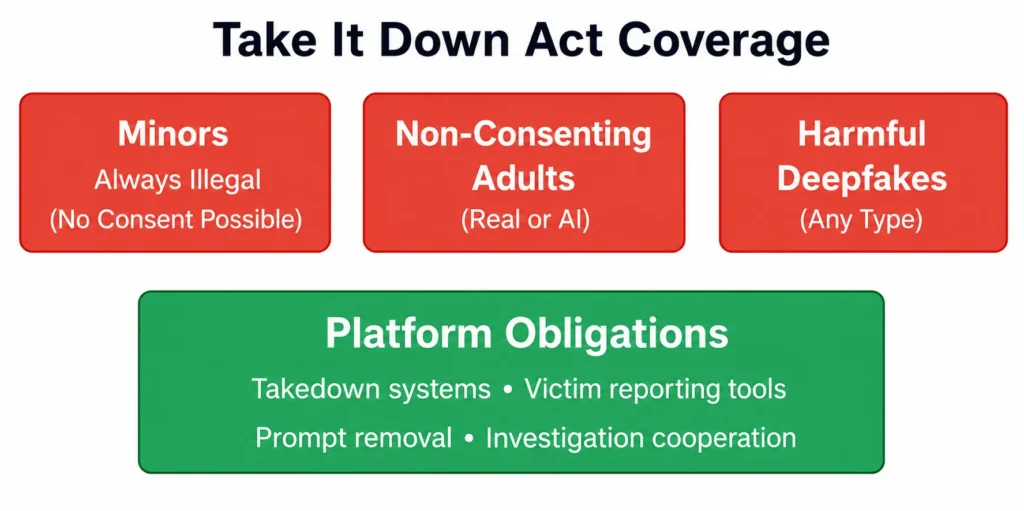
La Ley Take It Down tipifica como delito federal la publicación a sabiendas de imágenes sexualmente explícitas -reales o manipuladas digitalmente- sin el consentimiento de la persona representada. La ley cubre específicamente:
- Representaciones visuales íntimas de menores (siempre ilegales, independientemente del consentimiento)
- Representaciones visuales íntimas de adultos no consentidores
- Cualquier deepfake, sea o no una representación íntima, que pretenda causar daño
La ley se aprobó casi por unanimidad en el Congreso en medio de un aumento del acoso por deepfake que afecta a estudiantes y educadores, especialmente a chicas adolescentes a las que se dirige contenido explícito generado por IA.
Requisitos de la plataforma y procedimientos de retirada
Además de tipificar como delito la creación y distribución de contenidos no consentidos, la Ley Take It Down exige a las plataformas en línea cubiertas que establezcan sistemas para que las víctimas puedan denunciar este tipo de material.
El proceso establecido en la ley exige que las plataformas apliquen procedimientos que incluyan:
- Una firma electrónica de la persona representada en el contenido
- Una breve declaración que demuestre que la persona cree de buena fe que la representación no fue consentida
- Información suficiente para que la plataforma localice el contenido
- Eliminación inmediata de los contenidos denunciados una vez verificados
Los centros escolares deben prepararse ahora para las nuevas obligaciones legales, los procesos de información y la posibilidad de que aumenten las investigaciones en este marco.
Sanciones y ejecución
La ley entró en vigor inmediatamente después de su firma. Los infractores se enfrentan a sanciones penales, aunque las directrices específicas para la imposición de penas varían en función de la gravedad del delito, de si hay menores implicados y de la escala de distribución.
Esto representa una nueva y poderosa herramienta para luchar contra la creciente amenaza de la pornografía deepfake generada por IA y los contenidos explícitos no consentidos, pero las dificultades para hacer cumplir la ley siguen siendo considerables dada la naturaleza descentralizada de la distribución de contenidos en línea.
Panorama jurídico mundial e iniciativas políticas
Estados Unidos no es el único país que se enfrenta a la pornografía generada por la IA. Gobiernos de todo el mundo están desarrollando marcos para abordar estos retos.
Enfoques normativos internacionales
Según la Academia Americana de Pediatría, la Unión Internacional de Telecomunicaciones (UIT) está desarrollando normas para poner marcas de agua a los vídeos, colocando un logotipo o un código único dentro del vídeo. Normas como la marca de agua ayudan a recopilar datos como la identidad del creador, especialmente importante porque los vídeos contribuyen de forma significativa al tráfico de Internet.
Las distintas jurisdicciones han adoptado enfoques diferentes:
- Algunos países penalizan todas las imágenes íntimas no consentidas, ya sean reales o sintéticas.
- Otros se centran en la responsabilidad de las plataformas y los requisitos de retirada de fondos
- Varios países están implantando sistemas obligatorios de autenticación de contenidos
- Los organismos internacionales trabajan para estandarizar los métodos de detección y atribución.
El reto reside en la aplicación transfronteriza. Los contenidos creados en una jurisdicción pueden distribuirse por todo el mundo en cuestión de segundos, lo que complica los recursos legales para las víctimas.
Normas de autenticación de contenidos
Están surgiendo normas técnicas para ayudar a distinguir los contenidos auténticos del material generado por IA. Una de ellas es la marca de agua, que incrusta marcadores invisibles que identifican los contenidos sintéticos.
Pero aquí es donde la cosa se complica. Estos sistemas solo funcionan si los creadores los aplican voluntariamente, y los actores maliciosos tienen pocos incentivos para etiquetar sus contenidos como falsos.
Métodos de detección y sus limitaciones
A medida que avanza la tecnología de síntesis de deepfakes, los métodos de detección luchan por seguir el ritmo. La investigación caracteriza esta situación como una lucha desigual entre las capacidades de creación e identificación.
Enfoques de detección actuales
Los investigadores han desarrollado varios métodos para identificar los medios sintéticos:
- Análisis de artefactos: Los primeros deepfakes mostraban signos reveladores como una iluminación incoherente, patrones de parpadeo poco naturales y distorsiones faciales en los límites de los fotogramas. Los sistemas modernos han eliminado en gran medida estos artefactos evidentes.
- Análisis en el dominio de la frecuencia: El examen de las imágenes en el espacio de frecuencias puede revelar patrones característicos de la generación sintética. Tanto los modelos de difusión como los GAN dejan huellas dactilares distintas, pero estas firmas evolucionan a medida que mejoran los modelos.
- Detección multimodal: La investigación sobre la detección generalizada de medios sintéticos sugiere que la combinación de varias modalidades de detección mejora la precisión. Si se analizan conjuntamente los componentes visuales y sonoros, se obtienen mejores resultados que si se examinan por separado.
- Clasificadores de aprendizaje profundo: Entrenar redes neuronales específicamente para identificar contenidos sintéticos resulta prometedor, pero estos detectores se enfrentan a un reto fundamental: se entrenan con contenidos sintéticos conocidos y tienen dificultades con los nuevos métodos de generación.
El problema de la carrera armamentística
La detección se enfrenta a una desventaja inherente. Cada vez que surge un nuevo método de detección, los desarrolladores de generadores pueden incorporar ese mecanismo de detección a su proceso de formación, enseñando así al generador a eludir la detección.
Esto crea una carrera armamentística perpetua en la que las capacidades de síntesis superan constantemente a los métodos de detección.
El rápido avance de la tecnología deepfake ha elevado considerablemente el realismo y la accesibilidad de los contenidos sintéticos. Los métodos de detección que funcionaban con fiabilidad en 2022 muestran una eficacia drásticamente reducida frente a los contenidos generados por los modelos de 2026.
Capacidad de detección humana
El estudio de la Universidad de Florida sobre deepfakes de audio reveló que los humanos obtienen mejores resultados que las adivinanzas aleatorias, pero no llegan a una identificación fiable. Con una tasa de precisión de 73%, más de uno de cada cuatro deepfakes engañó a los oyentes humanos.
Los deepfakes visuales presentan retos aún mayores. Los debates en la comunidad entre quienes han trabajado con estos sistemas revelan que distinguir imágenes sintéticas de alta calidad de fotografías auténticas se ha convertido en una tarea casi imposible para observadores no entrenados.
| Método de detección | Puntos fuertes | Limitaciones |
|---|---|---|
| Análisis de artefactos visuales | Rapidez y sencillez de cálculo | Los modelos modernos eliminan los artefactos obvios |
| Análisis en el dominio de la frecuencia | Detecta firmas específicas del modelo | Requiere una nueva formación para cada nuevo tipo de generador |
| Clasificadores de aprendizaje profundo | Alta precisión en modelos conocidos | Escasa generalización a nuevos métodos |
| Sistemas multimodales | Más solidez en todos los tipos de contenidos | Costoso desde el punto de vista informático, aún en evolución |
| Revisión Humana | Comprensión contextual | Sólo 73% exacto, no escala |
Implicaciones éticas e impacto social
Más allá de las consideraciones jurídicas y técnicas, la pornografía generada por IA plantea profundas cuestiones éticas sobre el consentimiento, la identidad y la dignidad humana.
La crisis del consentimiento
La pornografía tradicional, sean cuales sean sus otros problemas, implica a artistas que (idealmente) consienten su participación. Los contenidos generados por IA que muestran a personas reales eliminan por completo este marco de consentimiento.
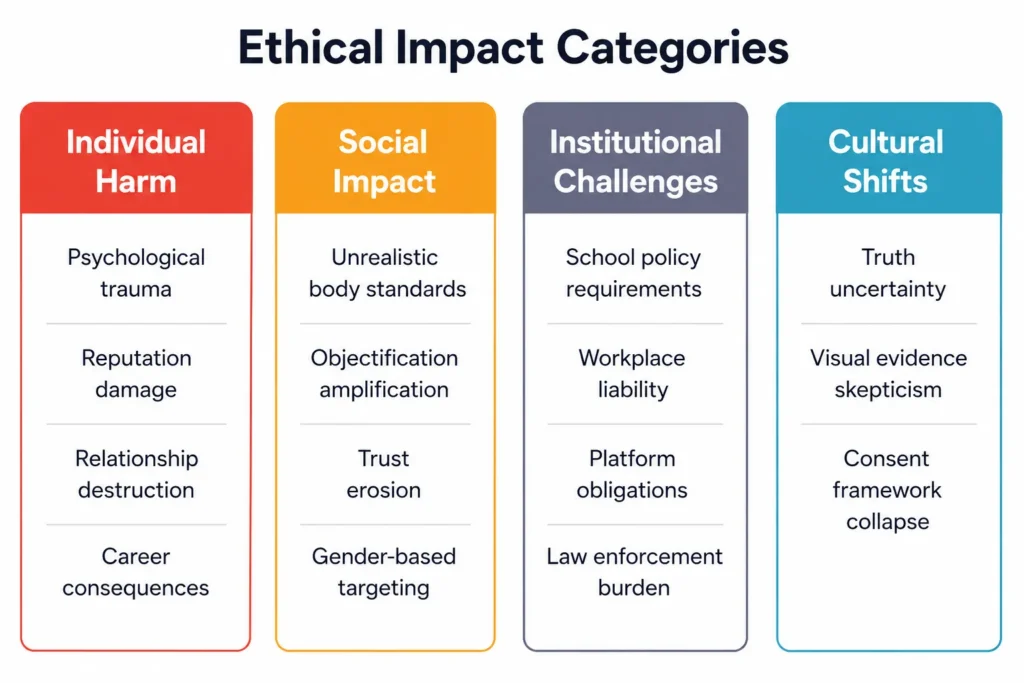
Especialmente para las mujeres, esta tecnología representa un escenario de pesadilla. La cara de cualquiera puede insertarse en contenidos explícitos sin permiso, creando material que parece lo bastante auténtico como para devastar reputaciones, relaciones y carreras.
El daño psicológico va más allá del daño a la reputación. Las víctimas manifiestan sentimientos de violación comparables a la agresión física: su imagen digital se explota de formas que nunca autorizaron.
Impacto en la autoimagen y los estándares corporales
Los generadores de porno que utilizan inteligencia artificial pueden crear fácilmente imágenes pornográficas que pueden reforzar ideales corporales poco realistas. La pregunta que se plantean los investigadores es: ¿cambia esto la forma en que nos vemos a nosotros mismos y a los demás?
Los sistemas de IA entrenados a partir de conjuntos de datos tienden a reproducir y amplificar las preferencias estéticas incorporadas en esos datos de entrenamiento. Cuando estos sistemas generan cuerpos idealizados que no existen en la naturaleza, crean nuevos puntos de comparación que afectan a la autopercepción.
La disponibilidad de porno de IA personalizable también plantea cuestiones sobre la cosificación y la mercantilización de la apariencia humana. Los usuarios pueden especificar características físicas exactas, reduciendo seres humanos complejos a un menú de atributos seleccionables.
La evolución del porno vengativo
La IA ha creado un nuevo tipo de porno vengativo. El porno de venganza tradicional consistía en distribuir imágenes íntimas reales compartidas en confianza. El porno de venganza generado por IA no requiere tales imágenes, solo algunas fotos de las redes sociales.
Esto reduce drásticamente la barrera para crear contenidos dañinos. Antiguas parejas, acosadores o completos desconocidos pueden generar material explícito convincente en el que aparezca cualquier persona con presencia pública en las redes sociales.
Internet sopesa ahora los costes de las imágenes de IA accesibles. Los creadores de OnlyFans denuncian que los contenidos no autorizados generados por IA socavan su trabajo legítimo. Las víctimas encuentran deepfakes de sí mismos circulando por las plataformas a pesar de no haber creado nunca ese contenido.
Implicaciones educativas y laborales
Las escuelas se enfrentan a retos particulares. El aumento del acoso por deepfake que afecta a estudiantes y educadores -especialmente a chicas adolescentes a las que se dirige contenido explícito generado por IA- impulsó la aprobación de la Ley Take It Down.
Las instituciones educativas deben ahora aplicar políticas, formar al personal, apoyar a las víctimas y cooperar con las investigaciones policiales. La carga recae desproporcionadamente sobre unos recursos administrativos ya de por sí escasos.
Los lugares de trabajo se enfrentan a retos similares. Los empleados atacados por contenidos deepfake pueden experimentar entornos de trabajo hostiles. Los empleadores deben desarrollar protocolos de respuesta mientras navegan por complejas obligaciones legales.
El incierto futuro de la verdad
Quizá el impacto más profundo de la tecnología deepfake vaya más allá de la pornografía y afecte a la propia naturaleza de las pruebas y la verdad en la sociedad digital.
Erosión de las pruebas visuales
Durante la mayor parte de la historia de la humanidad, ver significaba creer. Las fotografías y los vídeos eran pruebas fidedignas de los acontecimientos. Esa certeza se ha evaporado.
Cuando cualquier imagen o vídeo puede ser sintético, las pruebas visuales pierden su poder persuasivo. Esto crea oportunidades para que los malos actores descarten las pruebas auténticas como “otro deepfake más”.”
La inteligencia artificial, los deepfakes y el incierto futuro de la verdad se entrecruzan ahora de forma compleja. Los vídeos legítimos pueden ser tachados de falsos. Los contenidos falsos pueden difundirse antes de ser verificados. La verdad es más difícil de establecer con cada avance tecnológico.
El dividendo del mentiroso
Los investigadores han identificado lo que denominan el “dividendo del mentiroso”, es decir, el beneficio que obtienen los actores deshonestos de la mera existencia de la tecnología deepfake, aunque ellos mismos nunca creen deepfakes.
Cuando surgen contenidos auténticamente comprometedores, el sujeto puede ahora afirmar que se trata de un deepfake. La existencia de esta tecnología proporciona una negación plausible que antes no existía.
Esto altera fundamentalmente la rendición de cuentas. Los políticos grabados en vídeo haciendo declaraciones controvertidas pueden alegar falsedad. Los delincuentes pueden impugnar las pruebas de vídeo. Las víctimas de auténtico acoso se enfrentan a un nuevo escepticismo.
Plataforma y respuestas políticas
El reto para las plataformas y los responsables políticos consiste en equilibrar intereses contrapuestos:
- Proteger la libertad de expresión y evitar los contenidos nocivos
- Permitir usos creativos legítimos y bloquear las aplicaciones maliciosas
- Preservar la intimidad al tiempo que se facilita el cumplimiento de la ley
- Apoyar la innovación evitando los abusos
La Ley de retirada de contenidos representa un enfoque centrado en los contenidos no consentidos y la responsabilidad de las plataformas. Queda por ver si este marco resulta suficiente.
Qué pueden hacer las víctimas
Para quienes descubran contenidos pornográficos generados por IA en los que aparecen sin su consentimiento, existen varias vías de recurso con arreglo a la legislación vigente.
Medidas inmediatas
Documéntalo todo. Haz capturas de pantalla con marcas de tiempo, registra las URL y conserva todas las comunicaciones. Estas pruebas son cruciales tanto para los informes de la plataforma como para posibles acciones legales.
Informar a la plataforma que aloja el contenido. En virtud de la Ley Take It Down, las plataformas cubiertas deben implantar sistemas para que las víctimas denuncien contenidos no consentidos y deben eliminar rápidamente las infracciones verificadas.
El proceso de denuncia suele requerir una firma electrónica, una breve declaración de buena fe de que la representación no fue consentida e información suficiente para que la plataforma localice el contenido.
Opciones legales
Ahora es posible el procesamiento penal federal en virtud de la Ley Take It Down. Póngase en contacto con el Centro de Denuncias de Delitos en Internet del FBI o con las fuerzas de seguridad locales para denunciar infracciones.
Las leyes estatales pueden proporcionar recursos adicionales. Muchas jurisdicciones cuentan con leyes contra la pornografía vengativa que los tribunales están ampliando para incluir los contenidos generados por IA.
Las demandas civiles por difamación, invasión de la intimidad o imposición intencionada de angustia emocional también pueden ser viables, dependiendo de las circunstancias específicas y de la jurisdicción.
Recursos de apoyo
Las organizaciones especializadas en imágenes íntimas no consentidas pueden proporcionar orientación, apoyo emocional y ayuda práctica con los procedimientos de retirada y los procesos legales.
El apoyo a la salud mental se convierte en algo esencial. El impacto psicológico de verse a uno mismo en contenidos explícitos inventados puede ser grave. El asesoramiento profesional ayuda a las víctimas a procesar el trauma y desarrollar estrategias de afrontamiento.
La realidad técnica
Este artículo se ha centrado en las dimensiones jurídicas, éticas y sociales en lugar de ofrecer instrucciones técnicas paso a paso. Esto es deliberado.
La tecnología existe. Las herramientas son accesibles. Pero accesibilidad no es sinónimo de permisibilidad.
Por qué no se incluyen instrucciones detalladas
Proporcionar orientación técnica detallada para crear vídeos porno con IA sería:
- Facilitar potencialmente una actividad ilegal en virtud de la Ley Take It Down
- Permitir el acoso y la creación de contenidos no consentidos
- Contribuir a los daños documentados a lo largo de este artículo
- Ignorar las graves implicaciones éticas de esta tecnología
La capacidad técnica existe independientemente de si su uso es ético o legal. El hecho de que alguien pueda crear pornografía deepfake no significa que deba hacerlo, ni que hacerlo no acarree graves consecuencias.
Para quienes se plantean crear este tipo de contenidos
Antes de utilizar la IA para generar material pornográfico, ten en cuenta:
- Riesgos jurídicos: Crear contenidos no consentidos es ahora un delito federal. La distribución amplifica la responsabilidad. La cooperación de las plataformas con las fuerzas de seguridad implica la existencia de rastros digitales.
- Implicaciones éticas: Personas reales sufren daños reales por deepfakes no consentidos. El trauma psicológico está documentado y es grave.
- Huellas técnicas: El análisis forense puede identificar el origen de los contenidos sintéticos. Los métodos de detección siguen mejorando. Lo que hoy parece anónimo, mañana puede ser rastreable.
- Responsabilidad civil: La persecución penal no es el único riesgo. Las víctimas pueden demandar por daños y perjuicios. Las sentencias pueden ser cuantiosas y ejecutables.
Usos creativos legítimos
No todos los contenidos generados por IA plantean los mismos problemas. Los personajes totalmente ficticios creados sin referencia a individuos reales ocupan un territorio ético diferente al de los deepfakes que insertan a personas reales en escenarios explícitos sin consentimiento.
La distinción importa. La expresión artística y creativa tiene valor. Pero ese valor no se extiende a violar la dignidad y la autonomía de personas reales fabricando imágenes íntimas de ellas.
| Tipo de contenido | Situación jurídica | Evaluación ética |
|---|---|---|
| Personajes totalmente ficticios generados por IA | Generalmente legal (consulte la legislación local) | Éticamente complejo, debatido |
| Adultos con consentimiento que crean contenidos de sí mismos | Legal con las debidas garantías | Decisión de autonomía personal |
| Deepfakes de personas reales sin consentimiento | Delito federal en virtud de la Ley Take It Down | Clara violación ética |
| Cualquier contenido en el que aparezcan menores | Ilegal independientemente del consentimiento o de la generación de IA | Condenada universalmente |
Respuestas de la industria y las plataformas
Las principales empresas tecnológicas han empezado a aplicar políticas y medidas técnicas para hacer frente a la pornografía generada por la IA.
Políticas de las plataformas generadoras
Los principales generadores de imágenes de IA han implantado políticas de contenidos que prohíben la producción pornográfica. Sistemas como DALL-E, Midjourney y los despliegues oficiales de Stable Diffusion incluyen filtros que bloquean la generación de contenido explícito.
Pero la aplicación sigue siendo imperfecta. Los usuarios encuentran soluciones. Los modelos de código abierto pueden modificarse para eliminar restricciones. Surgen plataformas alternativas específicas para la generación de contenidos para adultos.
Responsabilidades de la plataforma de distribución
Las plataformas de medios sociales y los anfitriones de contenidos tienen la obligación, en virtud de la Ley de Retirada de Contenidos, de establecer sistemas de denuncia y retirada.
La aplicación varía. Algunas plataformas tienen procesos sólidos con tiempos de respuesta rápidos. Otras luchan con la escala, gestionando miles de informes mientras intentan verificar las reclamaciones y evitar la eliminación excesiva de contenido legítimo.
La carga recae especialmente en las plataformas más pequeñas, que carecen de los recursos y la infraestructura técnica de las grandes empresas tecnológicas.
Participación del procesador de pagos
Las empresas de servicios financieros han empezado a restringir sus servicios a las plataformas que alojan contenidos deepfake no consentidos. Sin procesamiento de pagos, la monetización se hace difícil, lo que reduce el incentivo económico para crear y distribuir este tipo de material.
Este enfoque refleja las estrategias utilizadas contra otros tipos de contenidos ilegales, aprovechando la infraestructura financiera como punto de estrangulamiento para la aplicación de la ley.
Investigación y perspectivas académicas
Las instituciones académicas están examinando la tecnología deepfake desde múltiples ángulos: técnico, jurídico, psicológico y sociológico.
Avances en la investigación sobre detección
La investigación para la detección generalizada de medios sintéticos continúa, y universidades y laboratorios de investigación desarrollan soluciones multimodales que combinan análisis visuales, sonoros y contextuales.
El camino se enfrenta a limitaciones y retos. Cada nuevo método de generación requiere nuevos enfoques de detección. La naturaleza adversarial del problema significa que la síntesis probablemente siempre mantendrá una ventaja sobre la detección.
Aun así, se producen avances. Mejora la precisión de la detección. Los métodos se vuelven más generalizables a través de diferentes técnicas de síntesis. Están surgiendo sistemas de detección en tiempo real que pueden marcar contenidos sospechosos en el momento de cargarlos en lugar de requerir una revisión manual.
Estudios de impacto sociológico
Los investigadores están documentando cómo afecta el porno con IA a la autoimagen y las relaciones interpersonales. Los primeros resultados sugieren preocupaciones sobre la imagen corporal, expectativas poco realistas y la normalización de imágenes no consentidas.
Los efectos a largo plazo siguen sin estar claros. La tecnología es demasiado nueva para realizar estudios longitudinales. Pero los primeros indicadores apuntan a efectos psicológicos y sociales mensurables, sobre todo entre los más jóvenes, que han crecido con fácil acceso tanto a la pornografía tradicional como a la generada por IA.
Beca jurídica
Las revistas jurídicas se plantean cuestiones sobre los límites de la libertad de expresión, la adecuación de los marcos jurídicos existentes y el equilibrio entre innovación y protección.
Los debates exploran si las leyes actuales abordan adecuadamente los medios sintéticos o si se necesitan nuevos marcos. El análisis comparativo examina los distintos enfoques nacionales, identificando las prácticas prometedoras y los posibles escollos.
Avanzar: Un reto social
La pornografía generada por la IA representa algo más que un problema técnico o jurídico. Es un reto social que requiere respuestas coordinadas en múltiples ámbitos.
Educación y alfabetización digital
Es esencial concienciar al público sobre las deepfakes: sus capacidades, limitaciones e implicaciones. La alfabetización digital debe incluir la evaluación crítica de los medios visuales y la comprensión de las posibilidades de los contenidos sintéticos.
Las escuelas están implantando planes de estudios que abordan estos temas. Pero el reto va más allá de la educación formal y abarca campañas de concienciación pública e iniciativas de alfabetización mediática para todos los grupos de edad.
Garantías técnicas
Continúa el desarrollo de mejores herramientas de detección. Los sistemas de autenticación de contenidos que pueden verificar la procedencia y detectar la manipulación son prometedores, aunque su aplicación sigue planteando importantes retos.
El desarrollo por la UIT de normas para la marca de agua en vídeos representa un avance hacia soluciones técnicas, pero su adopción voluntaria limita su eficacia.
Cambios culturales
Tal vez lo más importante sea que para abordar la pornografía generada por la IA es necesario un cambio cultural en torno al consentimiento, la privacidad y el tratamiento de las imágenes íntimas.
Resulta esencial construir una cultura que reconozca el daño causado por los contenidos no consentidos -ya sean reales o sintéticos- y que trate dicha creación y distribución como infracciones graves.
Esto incluye apoyar a las víctimas, exigir responsabilidades a los agresores y rechazar la normalización de las imágenes íntimas no consentidas en todas sus formas.
Preguntas frecuentes
Sí. Según la ley federal Take It Down, promulgada en mayo de 2025, publicar a sabiendas imágenes sexualmente explícitas -reales o generadas por IA- sin el consentimiento de la persona retratada es un delito federal. Esta ley se aplica tanto a los deepfakes de adultos como a cualquier representación íntima de menores. Los infractores se enfrentan a acciones penales, y las víctimas también pueden interponer recursos civiles. La ley entró en vigor inmediatamente después de su firma.
La detección sigue siendo difícil e imperfecta. Aunque se sigue investigando para generalizar la detección de medios sintéticos mediante enfoques multimodales, el rápido avance de la tecnología de generación crea una competencia desigual entre síntesis y detección. La Ley de retirada de contenidos obliga a las plataformas a implantar sistemas de denuncia y a retirar rápidamente los contenidos una vez verificados, pero la detección automática por sí sola no puede detectar todas las infracciones. La revisión humana y la denuncia de las víctimas siguen siendo componentes esenciales de la aplicación de la ley.
Actúa de inmediato documentando el contenido con capturas de pantalla y direcciones URL y, a continuación, denúncialo a la plataforma de alojamiento utilizando su proceso de denuncia Take It Down Act. Tendrás que proporcionar una firma electrónica, una declaración de buena fe de que la representación no fue consentida e información para localizar el contenido. Además, informe de la infracción a las fuerzas de seguridad a través del Centro de Denuncias de Delitos en Internet del FBI o a las autoridades locales. Considere la posibilidad de consultar con un abogado sobre los recursos civiles y busque apoyo de salud mental para procesar el impacto psicológico.
Según un estudio a gran escala de la Universidad de Florida sobre falsificaciones de audio, en el que participaron 1.200 personas, los humanos sólo alcanzaron una precisión de 73% al identificar el audio real de las falsificaciones digitales. Las falsificaciones visuales presentan retos aún mayores. Los contenidos modernos generados por inteligencia artificial son tan sofisticados que los observadores casuales tienen dificultades para distinguirlos del material auténtico. Los humanos obtienen mejores resultados que las suposiciones aleatorias, pero a menudo se dejan engañar por los detalles generados por las máquinas, lo que hace que la detección humana fiable sea cada vez menos realista a medida que avanza la tecnología.
La creación de personajes totalmente ficticios sin referencia a personas reales ocupa un territorio legal y ético diferente al de los deepfakes no consentidos. Los contenidos totalmente sintéticos que no representan a personas reales identificables suelen ser legales en la mayoría de las jurisdicciones, aunque las leyes locales varían. Los adultos que crean con su consentimiento contenidos de sí mismos utilizando herramientas de IA también entran en una categoría legalmente permitida en muchos ámbitos. Sin embargo, cualquier contenido en el que aparezcan menores (reales o generados por IA) es ilegal independientemente de las circunstancias, y crear deepfakes de personas reales sin consentimiento infringe la ley federal en virtud de la Take It Down Act.
Las capacidades de análisis forense están mejorando. Aunque los creadores puedan creer que operan de forma anónima, existen rastros digitales a través de registros de plataformas, registros de pagos, direcciones IP y huellas dactilares de dispositivos. La investigación sobre detección está desarrollando métodos para identificar modelos de generación específicos y rastrear potencialmente los contenidos sintéticos hasta su origen. Lo que hoy parece imposible de rastrear puede llegar a ser identificable a medida que avancen los métodos forenses. Además, las plataformas están obligadas a cooperar con las investigaciones policiales, y la Ley Take It Down refuerza los mecanismos de información e investigación.
Las respuestas globales varían según la jurisdicción. La Unión Internacional de Telecomunicaciones está elaborando normas sobre marcas de agua en los vídeos para facilitar la identificación del creador y la autenticación del contenido. Diferentes países han adoptado enfoques que van desde la penalización de las imágenes íntimas no consentidas a la aplicación de marcos de responsabilidad de las plataformas. El reto reside en la aplicación transfronteriza, ya que los contenidos creados en una jurisdicción pueden distribuirse por todo el mundo en cuestión de segundos. Los esfuerzos de coordinación internacional continúan, pero los marcos jurídicos siguen fragmentados y las capacidades de aplicación varían significativamente.
Conclusiones: Tecnología, responsabilidad y elección
La tecnología para crear vídeos pornográficos generados por inteligencia artificial existe y sigue avanzando rápidamente. El hardware de consumo y el software accesible han democratizado capacidades que antes requerían recursos profesionales.
Pero capacidad no equivale a permiso.
La Ley Take It Down representa la intervención federal más importante hasta la fecha, al tipificar como delito las imágenes íntimas no consentidas, ya sean reales o generadas por IA. Esta ley refleja el creciente reconocimiento del grave daño causado por la pornografía deepfake.
Los métodos de detección luchan por seguir el ritmo de las capacidades de generación, lo que supone un reto permanente para las plataformas, las fuerzas de seguridad y la sociedad. El futuro incierto de la verdad en una era en la que cualquier imagen puede ser sintética plantea profundas cuestiones sobre las pruebas, la rendición de cuentas y la confianza digital.
Hablando en serio: las implicaciones éticas van mucho más allá del cumplimiento de la ley. Personas reales sufren traumas reales cuando su imagen aparece en contenidos explícitos inventados. El daño psicológico está documentado. El daño a la reputación es grave. La violación de la dignidad y la autonomía es profunda.
Para quienes se planteen crear este tipo de contenidos: entiendan las consecuencias. Las sanciones legales son ahora sustanciales y aplicables. La responsabilidad civil puede ser aplastante. Los rastros digitales que dejas pueden ser rastreables incluso cuando crees que eres anónimo. Y más allá de los riesgos legales, estás contribuyendo a causar daños documentados a personas reales.
Para las víctimas: ahora existen recursos legales a nivel federal. La ley exige mecanismos de denuncia a las plataformas. Las fuerzas de seguridad disponen de nuevas herramientas de investigación y enjuiciamiento. Los recursos de apoyo pueden ayudar a superar los retos prácticos y psicológicos.
Para la sociedad: este reto exige respuestas coordinadas en los ámbitos técnico, jurídico, educativo y cultural. La sensibilización, el apoyo a las víctimas, la responsabilización de los autores y la mejora de las salvaguardias desempeñan un papel esencial.
La tecnología no desaparecerá. La IA generativa seguirá avanzando. Pero la forma en que la sociedad decida gobernar, utilizar y responder a estas capacidades sigue siendo una cuestión abierta, que dará forma a la cultura digital, las normas de privacidad y la dignidad humana en las generaciones venideras.
Elija con prudencia. Las consecuencias -jurídicas, éticas y humanas- son reales y duraderas.
Deja una respuesta