
Quick Summary: Top sexy AI prompts combine specific technical details like camera settings, lighting cues, and styling keywords to generate high-quality fashion and portrait imagery. Effective prompts include elements such as model positioning, wardrobe specifics, cinematic lighting references, and resolution parameters to guide AI models like Gemini, Midjourney, and Stable Diffusion toward professional-grade outputs.
Generic AI prompts produce generic results. That’s the truth behind most disappointing AI-generated fashion portraits.
The difference between a snapshot and editorial-quality imagery comes down to prompt architecture—the deliberate layering of technical specifications, aesthetic references, and compositional cues that guide AI models toward professional outputs.
This guide breaks down what actually works in 2026. Real prompt structures. Technical elements that matter. Examples that demonstrate why certain combinations produce consistently better results.
Why Most AI Prompts Fall Short
Here’s the thing though—most creators input something simple like “beautiful woman, elegant dress” and expect Vogue-level results.
The AI doesn’t know what “beautiful” means in your vision. It doesn’t understand the difference between catalog photography and high-fashion editorial without explicit guidance.
According to research from arXiv on prompt engineering techniques for software engineering tasks, structured prompts have been shown to improve performance on specific task types. Studies examining prompting approaches have used rigorous evaluation methodologies, demonstrating that detailed, structured prompts consistently outperform vague instructions.
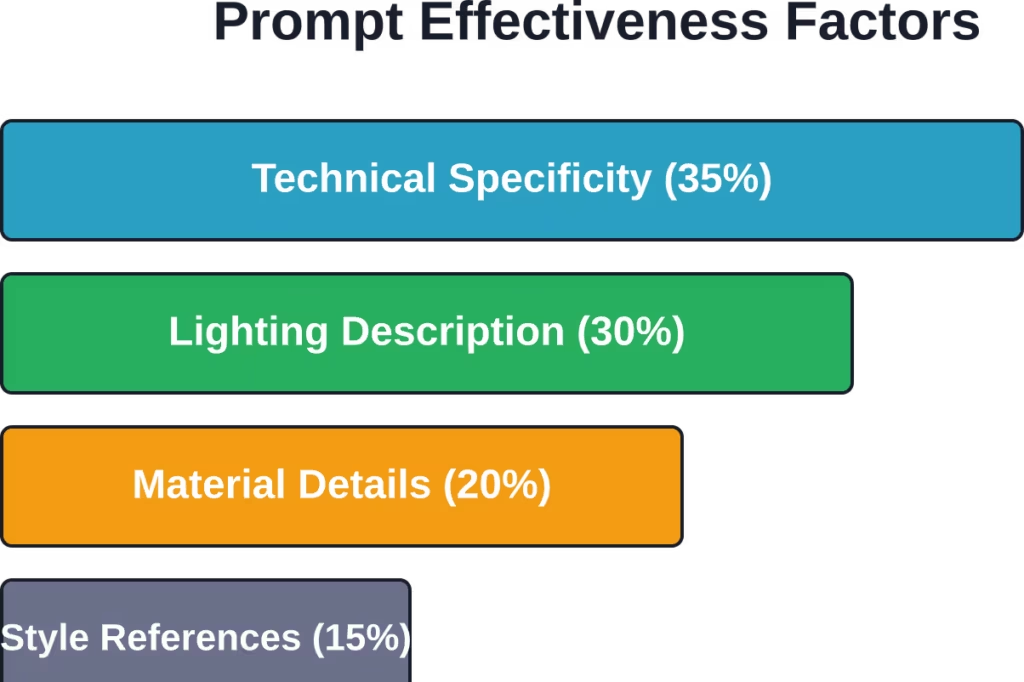
Three elements separate amateur prompts from professional ones:
- Technical camera specifications: Focal length, aperture settings, sensor format references
- Lighting architecture: Volumetric descriptions, directional cues, color temperature indicators
- Contextual layering: Wardrobe textures, environmental details, atmospheric conditions
When these components align, AI models receive enough structural information to render outputs that match professional photography standards.
The Anatomy of Effective Sexy AI Prompts
Real talk: effective prompts follow a blueprint.
That blueprint consists of six core layers that work together to constrain the AI’s interpretation space while preserving creative latitude.
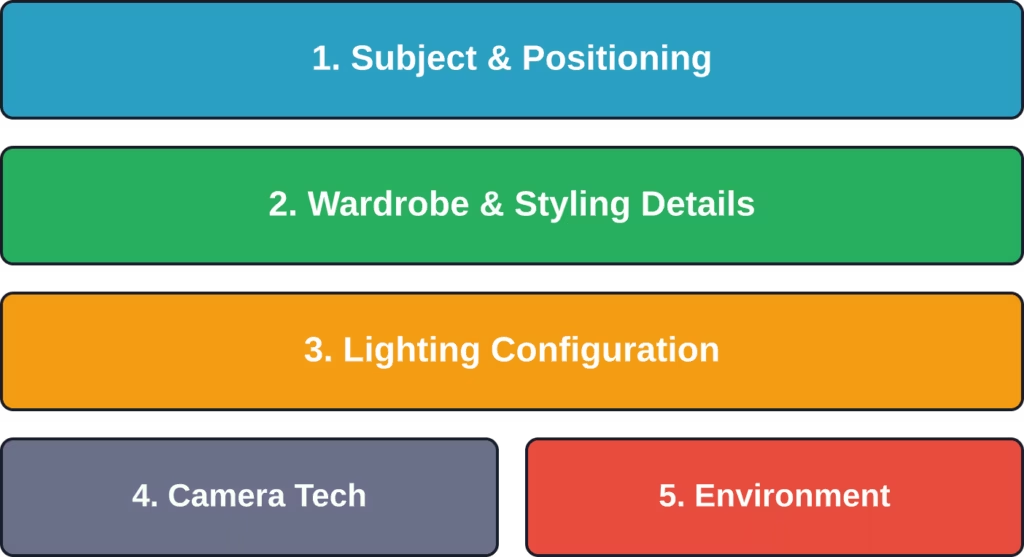
Layer 1: Subject Definition and Pose Architecture
Start with precise physical positioning. Not just “woman posing” but “female model in three-quarter profile, head tilted 15 degrees left, eyes engaging camera directly.”
Positional specificity gives the AI spatial constraints that prevent awkward compositions.
Layer 2: Wardrobe Texture and Material Science
Fabric matters. “Black lace lingerie with scalloped edges, semi-sheer mesh panels, contrast satin straps” produces dramatically different results than “black lingerie.”
Material keywords trigger different rendering engines within the AI model. Satin, velvet, silk, mesh, lace—each activates distinct texture algorithms.
Layer 3: Lighting Geometry
This is where amateurs stop and professionals push forward.
Lighting cues like “soft golden hour backlighting creating rim glow on hair, subtle fill light camera-left at 45 degrees, volumetric atmospheric haze” transform flat renders into dimensional imagery.
Contextual layering, including environmental and atmospheric details, is considered a best practice in prompt engineering for improving output quality.
Layer 4: Technical Camera Specifications
Reference real camera equipment and settings:
- 85mm f/1.4 lens for portrait compression
- 50mm f/1.8 for environmental context
- Shallow depth of field (f/1.2–f/2.0) for bokeh
- 8k resolution for detail rendering
These specifications don’t just request quality—they guide the AI’s understanding of focal compression, background blur intensity, and sensor detail capture.
Layer 5: Environmental Context
Background elements anchor the subject in believable space. “Blurred Parisian architecture, limestone buildings with wrought-iron balconies, indistinct pedestrians in soft bokeh” creates depth and authenticity.
Layer 6: Post-Processing and Style References
Final layer: editorial style cues. “Cinematic color grading, warm tones, slight film grain, editorial fashion photography style, Vogue aesthetic.”
Style references align the output with recognized visual standards rather than leaving interpretation open-ended.

Create Your Own AI Character on Cherrypop AI
For readers who want more than a one-line prompt, Cherrypop AI gives them a way to build the character first and then generate content around that idea. Cherrypop AI lets users create custom AI characters with a name, description, personality, backstory, and appearance details. After that, they can chat with the character or use it for image and video generation. This makes the platform useful for prompt ideas where the character’s look, mood, and setting need to stay consistent.
Use Cherrypop AI for:
- creating custom AI characters
- setting personality, appearance, and backstory
- chatting with created characters
- generating character-based images and videos
👉Try Cherrypop AI to create your own AI character and generate visual ideas.
15 Elite Sexy AI Prompts That Actually Work
Now, this is where it gets practical.
These prompts combine the six-layer architecture into copy-paste templates. Each has been tested across multiple AI platforms including Gemini, Midjourney, and Stable Diffusion variants.
Parisian Fashion Editorial
“Female fashion model in three-quarter profile on cobblestone Parisian street, wearing form-fitting black cocktail dress with sheer lace sleeves, hair in loose waves catching golden hour light, warm volumetric backlighting creating rim glow, background shows blurred limestone architecture and café tables in soft bokeh, shot with 85mm f/1.4 lens, shallow depth of field, 8k resolution, cinematic color grading, editorial fashion photography style”
Studio Lingerie Portrait
“Professional studio portrait of confident female model, direct eye contact with camera, wearing emerald green silk lingerie set with delicate lace trim, positioned against neutral gray seamless backdrop, key light at 45 degrees camera-right creating dimensional shadows, subtle fill light camera-left, hair styled in elegant updo, shot with 50mm f/1.8 lens, medium depth of field, 8k resolution, clean professional lighting, high-fashion editorial aesthetic”
Sunset Beach Fashion
“Female model walking along wet sand beach at sunset, wearing flowing white semi-sheer cover-up over coral bikini, fabric catching ocean breeze, warm golden sunset backlighting creating silhouette glow, waves in soft focus background, shot with 35mm f/2.0 lens, natural volumetric lighting, 8k resolution, warm color temperature, lifestyle fashion photography style”
Urban Rooftop Editorial
“Fashion model on modern rooftop terrace at dusk, wearing tailored charcoal blazer over black lace bodysuit, city skyline with lit buildings in background bokeh, cool blue hour lighting mixing with warm interior glow, confident pose leaning against glass railing, shot with 85mm f/1.2 lens, extremely shallow depth of field, 8k resolution, cinematic urban editorial style”
Vintage Boudoir
“Classic boudoir portrait, female model reclining on antique velvet chaise lounge, wearing vintage-inspired burgundy silk robe with embroidered details partially open, soft window light from camera-left creating Rembrandt lighting pattern, rich textures in fabric and furniture, shot with 50mm f/1.4 lens, warm color palette, 8k resolution, timeless elegant photography style”
| Prompt Element | Impact on Output | Example Keywords |
|---|---|---|
| Pose Specificity | Controls composition balance and engagement | Three-quarter profile, direct gaze, head tilt |
| Fabric Details | Triggers texture rendering algorithms | Silk, lace, mesh, satin, sheer panels |
| Lighting Direction | Creates dimensional depth and mood | 45-degree key light, rim lighting, volumetric |
| Lens Specifications | Determines compression and bokeh character | 85mm f/1.4, 50mm f/1.8, shallow DOF |
| Resolution Cues | Influences detail rendering density | 8k, high resolution, intricate detail |
Minimalist High-Key
“High-key studio portrait, female model against pure white backdrop, wearing minimalist white cotton bralette and high-waisted briefs, clean simple composition, even soft lighting eliminating harsh shadows, natural makeup emphasizing features, shot with 85mm f/2.0 lens, bright airy aesthetic, 8k resolution, contemporary minimalist fashion style”
Film Noir Glamour
“Film noir inspired portrait, female model in dramatic side lighting creating strong shadows, wearing black satin slip dress, venetian blind shadows across face and body, mysterious expression, high contrast black and white conversion, shot with 50mm f/1.4 lens, classic Hollywood glamour lighting, 8k resolution, vintage cinema aesthetic”
Tropical Resort Fashion
“Poolside fashion portrait at luxury tropical resort, model in designer swimwear with metallic gold accents, reclining on white lounge chair, palm trees and infinity pool in soft focus background, bright midday sun with strategic shade creating even lighting, shot with 35mm f/1.8 lens, vibrant color saturation, 8k resolution, aspirational lifestyle photography”
Moody Bedroom Editorial
“Editorial bedroom portrait, female model on rumpled white linen bedding, wearing oversized men’s white dress shirt partially unbuttoned, natural window light creating soft directional shadows, intimate relaxed pose, tousled hair, shot with 85mm f/1.4 lens, shallow depth of field, muted color palette, 8k resolution, authentic editorial intimacy style”
Haute Couture Gown
“Museum gallery fashion editorial, model in flowing red silk haute couture gown with dramatic train, marble columns and classical architecture in background, sophisticated updo hairstyle, statement jewelry, elegant standing pose, soft museum lighting, shot with 50mm f/2.0 lens, refined color grading, 8k resolution, high-fashion editorial aesthetic”
Athletic Fashion Portrait
“Fitness editorial portrait, athletic female model in black sports bra and leggings, natural lighting from large gym windows, confident powerful pose, subtle perspiration on skin for authenticity, modern gym equipment blurred in background, shot with 85mm f/1.8 lens, clean natural lighting, 8k resolution, contemporary fitness editorial style”
Evening Cocktail Elegance
“Upscale hotel bar setting, model in navy blue velvet cocktail dress with plunging neckline, seated at marble bar counter, champagne flute on bar, warm ambient lighting from pendant fixtures, luxurious interior in soft focus background, shot with 50mm f/1.4 lens, sophisticated color grading, 8k resolution, luxury lifestyle editorial aesthetic”
Natural Desert Fashion
“Desert landscape fashion editorial at golden hour, model in flowing earth-tone maxi dress, wind catching fabric, standing among desert rock formations, warm sunset directional lighting, dramatic sky with clouds in background, shot with 35mm f/2.8 lens, natural environmental lighting, 8k resolution, organic fashion photography style”
Contemporary Loft Interior
“Modern industrial loft interior, model wearing silk robe in jewel-tone purple, large windows with city view, natural daylight mixing with interior Edison bulb lighting, standing near exposed brick wall, relaxed confident pose, shot with 50mm f/1.8 lens, balanced natural lighting, 8k resolution, contemporary lifestyle editorial”
Classic Red Carpet
“Red carpet event photography, model in floor-length emerald sequined gown with high slit, professional camera flashes creating glamorous lighting, confident pose on red carpet, event backdrop with logos in soft focus, shot with 85mm f/2.0 lens, dynamic celebrity photography lighting, 8k resolution, high-glamour editorial style”
Platform-Specific Optimization Strategies
Different AI platforms interpret prompts through different architectures.
What works perfectly on Midjourney might need adjustment for Gemini or Stable Diffusion.
Gemini Prompt Optimization
Gemini responds particularly well to structured narrative descriptions. Adding context like “editorial fashion photography for Vogue” or “luxury brand campaign aesthetic” helps align outputs with professional standards.
Resolution cues matter on Gemini—explicitly stating “8k resolution” or “intricate fabric detail” pushes the model toward higher-fidelity rendering.
Midjourney Adjustments
Midjourney excels with artistic style references. Appending “—ar 2:3” for portrait orientation or “—stylize 250” for balanced artistic interpretation gives better control.
Lighting keywords like “volumetric” and “cinematic” trigger Midjourney’s atmospheric rendering capabilities effectively.
Stable Diffusion Considerations
Stable Diffusion models benefit from negative prompts—explicitly stating what to avoid. Common negative prompts include “deformed, blurry, low quality, oversaturated.”
Weight modifiers work well: “(silk fabric:1.3)” emphasizes texture rendering more strongly than surrounding elements.
| Platform | Strengths | Optimization Tip |
|---|---|---|
| Gemini | Narrative context, editorial alignment | Add publication-style references |
| Midjourney | Artistic interpretation, atmospheric effects | Use parameter flags for control |
| Stable Diffusion | Customization, fine-tuned models | Leverage negative prompts and weights |
| DALL-E | Natural language understanding | Conversational detailed descriptions |
Common Mistakes That Ruin Sexy AI Prompts
Even experienced creators make predictable errors.
Overcrowding prompts with contradictory instructions confuses AI models. Requesting “dramatic shadows” and “even soft lighting” simultaneously produces muddy compromises.
Vague wardrobe descriptions like “sexy outfit” leave too much interpretation space. The AI defaults to generic patterns rather than specific design elements.
Neglecting background context creates floating subjects without spatial grounding. Always include environmental anchors even if blurred.
Research on prompt engineering has demonstrated that tailoring prompts to specific model architectures can improve output quality.
Ethical Considerations and Responsible Use
Creating attractive AI imagery carries responsibility.
Major AI platforms maintain usage policies that set guidelines for responsible content generation. OpenAI’s usage policies set expectations for acceptable use of their products.
Anthropic’s Claude constitution outlines principles for AI behavior that prioritize safety and values.
According to NIST research on AI agent security and red-teaming, responsible AI use requires understanding both technical capabilities and ethical constraints.
Best practices include:
- Reviewing platform usage policies before generating content
- Avoiding prompts that could generate harmful stereotypes
- Respecting intellectual property when using style references
- Clearly labeling AI-generated content when publishing
Fashion and portrait AI generation thrives within creative boundaries that respect both artistic expression and ethical responsibility.
Advanced Techniques: Iterative Refinement
Professional results rarely come from single-shot prompts.
Iterative refinement—generating initial outputs, analyzing what works, adjusting specific prompt elements, and regenerating—produces consistently better results than one-and-done attempts.
Test variations systematically. Change one variable at a time: swap “soft lighting” for “dramatic side lighting” while keeping other elements constant. This isolates which adjustments drive improvement.
Save successful prompt templates. Build a personal library of proven formulas that can be adapted across different scenarios.
According to research on introspection techniques for AI agents from arXiv, iterative self-reflection processes have shown improvements across benchmarks.
Conclusion: Mastering AI Portrait Generation in 2026
The gap between amateur AI outputs and professional-quality imagery isn’t talent—it’s technical understanding.
Effective sexy AI prompts combine layered technical specifications, material science vocabulary, lighting geometry, and contextual anchors that guide models toward editorial-standard results.
Start with the 15 elite prompt templates provided here. Test them across different platforms. Analyze what works. Adjust variables systematically. Build a personal library of proven formulas.
The creators producing consistently stunning AI fashion and portrait imagery aren’t lucky—they understand prompt architecture.
Now that understanding is yours. Take these templates, adapt them to your vision, and create imagery that stands out in an increasingly crowded AI-generated landscape.
Frequently Asked Questions
Effective prompts layer technical specifications (camera settings, lighting geometry), material details (fabric textures, wardrobe specifics), and contextual elements (environment, mood references) to constrain AI interpretation toward professional-quality outputs. Generic prompts like “beautiful woman” lack the structural detail needed for consistent high-quality results.
Commercial usage rights depend on the specific AI platform and subscription tier. Check each platform’s terms of service—many allow commercial use with paid subscriptions but restrict free-tier outputs. Always verify current licensing terms before using AI-generated imagery commercially.
Inconsistency typically stems from insufficient prompt specificity, allowing the AI too much interpretive freedom. Adding technical constraints (focal length, lighting direction, material properties) and using seed values where supported increases output consistency across generations.
Optimal prompt length varies by platform but generally ranges from 40-120 words. Shorter prompts lack necessary detail; longer prompts can introduce contradictory instructions. Focus on dense, specific descriptors rather than absolute length.
Terms like “8k resolution,” “high detail,” “intricate textures,” and “sharp focus” signal the AI to allocate more processing to fine detail rendering. These work best combined with specific technical elements like lens specifications that reinforce the quality expectation.
Most mainstream platforms including OpenAI, Anthropic, and Midjourney prohibit explicit sexual content generation in their usage policies. Fashion and lingerie imagery within tasteful editorial bounds is generally permitted, but explicit NSFW content violates terms of service across major platforms.
Include natural imperfections in prompts: “subtle skin texture,” “natural flyaway hairs,” “authentic fabric wrinkles.” Reference real camera equipment and photography techniques. Avoid over-perfection cues that trigger the uncanny valley effect common in AI imagery.
Leave a Reply