
Quick Summary: OpenAI discontinued Sora on April 26, 2026, making NSFW content generation impossible through the official platform. While Sora enforced strict content policies that blocked adult content, alternative AI video generators like Higgsfield, Runway, and specialized NSFW-focused platforms now fill this gap for creators seeking uncensored video generation capabilities.
The conversation around Sora AI and NSFW prompts took an unexpected turn in 2026. What started as excitement over OpenAI’s groundbreaking video generation model ended with a shutdown announcement that left creators scrambling for alternatives.
Here’s the reality: Sora never officially supported NSFW content. The platform’s usage policies explicitly prohibited adult material, violent content, and other sensitive categories from day one.
But that didn’t stop people from trying.
What Happened to Sora AI?
According to the official OpenAI Help Center, the Sora web and app experiences were discontinued on April 26, 2026. The Sora API will be discontinued on September 24, 2026, giving developers a brief window to migrate their projects.
This shutdown wasn’t sudden. OpenAI had been facing mounting criticism about Sora’s restrictive content policies long before the discontinuation announcement.
Community discussions on the OpenAI Developer Community revealed widespread frustration. A post on the OpenAI Developer Community from May 20, 2025 stated “Sora, Your content policy is killing creativity.” The complaint highlighted how even non-NSFW creative projects were being flagged and blocked by overzealous filters.
The content moderation system was catching everything from fictional character violence to artistic nude studies that would be acceptable in traditional media. Creators working on horror films, action sequences, or dramatic narratives found their work blocked repeatedly.
Why Sora Blocked NSFW Content
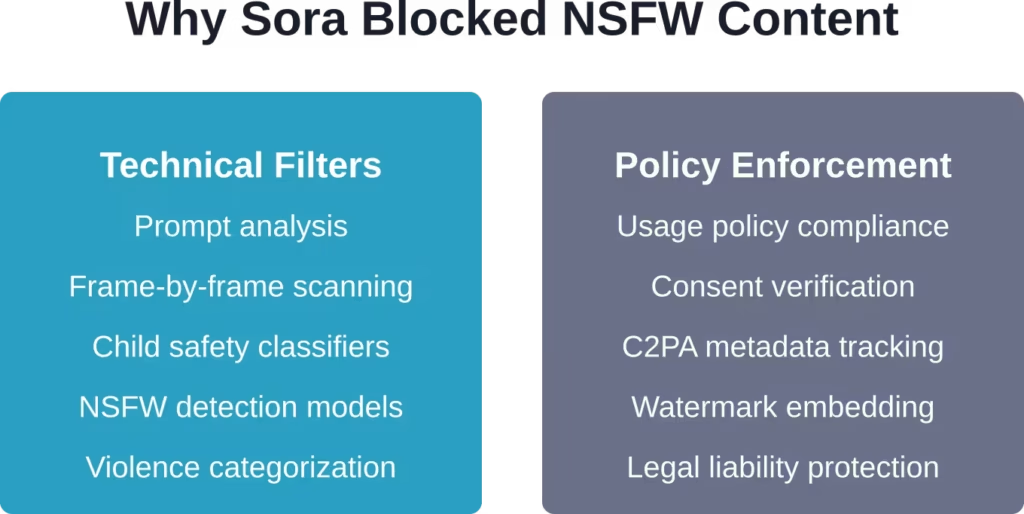
OpenAI built Sora with safety guardrails embedded at the foundation. The official “Launching Sora responsibly” documentation outlined several protection layers:
- Visible watermarks on all generated videos
- C2PA metadata embedding for content tracking
- Reverse-image and audio search capabilities
- Consent-based likeness usage restrictions
- Child safety classifiers achieving 97.86% accuracy on realistic child images when classifying as ‘is child’
The Sora System Card detailed the technical implementation. The model used classifiers trained on multiple categories informed by previous work on DALL-E 2 and DALL-E 3. These filters analyzed both text prompts and generated frames in real-time.
According to the system documentation, the child safety classifier achieved 97.86% accuracy on realistic child images and 99.28% accuracy on realistic adult images. That sounds impressive until creators realized the system was flagging legitimate artistic content as violations.
Understanding Sora’s Content Restrictions
The usage policies published on October 29, 2025, laid out clear boundaries. OpenAI prohibited content involving sexual material, child safety violations, hate speech, harassment, violent or gory imagery, and illegal activities.
That’s standard for mainstream AI platforms. But the implementation went further.
The system flagged content based on contextual analysis, not just explicit keywords. A prompt like “romantic beach scene at sunset” might pass, but adding “passionate embrace” could trigger warnings. The line between artistic expression and policy violation became frustratingly arbitrary.
Creators reported that even historically accurate content got blocked. A filmmaker trying to generate World War II combat footage for a documentary project received repeated rejections. Horror filmmakers couldn’t create zombie scenes. Action directors couldn’t generate realistic fight choreography.
The Creative Limitation Problem
Here’s where it gets interesting. The most vocal complaints came from legitimate creators, not people trying to make adult content.
Community discussions highlighted creators working on science fiction films who couldn’t generate alien creature designs because the organic forms triggered biometric detection filters. Fashion designers creating avant-garde runway concepts found their work blocked for “suggestive content” when models wore experimental clothing.
One creator summed it up: “There are thousands of irrelevant, dull, completely insignificant blobs of subpar productions that pretend to mean something when they mean nothing.”
The safe content that passed moderation tended toward generic, family-friendly material. The platform filled with videos of “car-driving cats, parachuting pigs, and banal memes” while serious creative work got rejected.
What Prompts Actually Worked on Sora
Before the shutdown, creators who successfully used Sora focused on detailed, technical prompts that avoided trigger keywords. The official Sora 2 Prompting Guide recommended treating prompts like briefing a cinematographer.
Strong prompts included specific details about:
- Camera movement and lens specifications
- Lighting conditions and atmosphere
- Character actions and timing
- Environmental details and textures
- Color palette and mood
A weak prompt: “A beautiful street at night.”
A strong prompt: “Wet asphalt, zebra crosswalk, neon signs reflecting in puddles, volumetric fog, anamorphic 2.0x lens, shallow depth of field.”
The system responded better to cinematographic language than narrative descriptions. Instead of “person moves quickly,” successful creators wrote “cyclist pedals three times, brakes, and stops at crosswalk.”
| Weak Prompt | Strong Prompt | Why It Works |
|---|---|---|
| A beautiful street at night | Wet asphalt, zebra crosswalk, neon signs reflecting in puddles | Specific visual details guide the model |
| Person moves quickly | Cyclist pedals three times, brakes, stops at crosswalk | Precise action timing and sequence |
| Cinematic look | Anamorphic 2.0x lens, shallow DOF, volumetric light | Technical camera specifications |
| Scary scene | Abandoned warehouse, broken windows, dust particles in moonlight | Atmospheric elements without violence |
Viral Video Strategies That Worked
Before Sora’s discontinuation, creators found success with specific video categories. Community discussions and social media posts revealed patterns in viral content.
According to a Medium article by Travis Nicholson from October 10, 2025, one creator reported on X: “I just made a TikTok account. Posted a Sora video of squirrels jumping on a trampoline. 7 million views. 377,000 likes. Will hit 20,000 followers today.”
The formula for viral Sora videos focused on:
Hook + Scene + Twist. The first second had to grab attention. The middle established an unexpected scenario. The ending delivered a surprising payoff.
Successful categories included absurd animal scenarios, everyday objects in impossible situations, nostalgic reimaginings of familiar settings, and hyper-realistic fantasy environments.
What made these work? They pushed creative boundaries without triggering content filters. A cat driving a sports car is absurd but harmless. A Victorian-era smartphone commercial is anachronistic but clean.
Top Sora AI NSFW Alternatives in 2026
Now that Sora is discontinued, creators seeking less restrictive platforms have several options. These alternatives vary in their content policies, capabilities, and intended audiences.
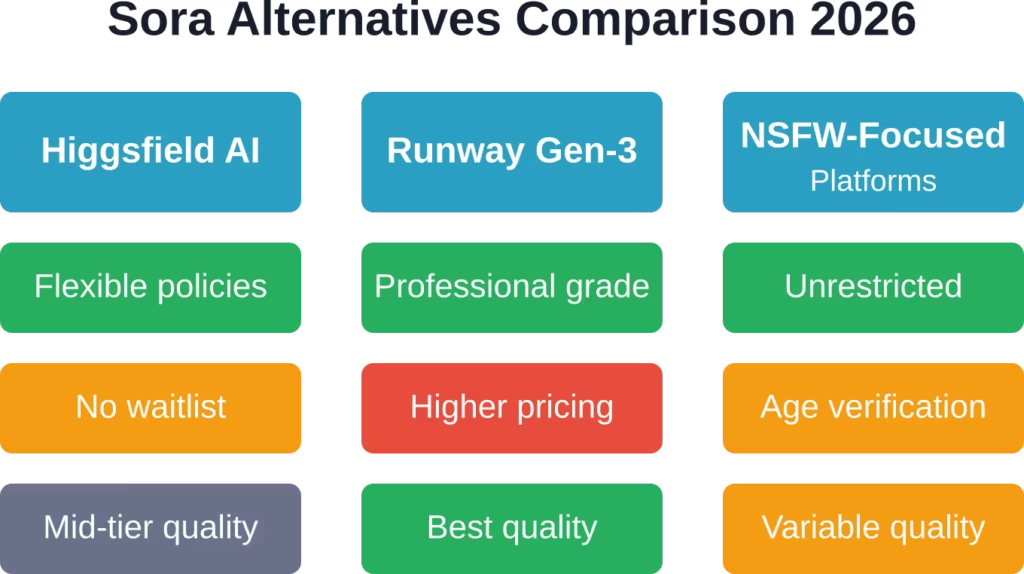
Higgsfield AI
According to competitor sources, Higgsfield is positioned as a Sora alternative. One YouTube creator mentioned “No invite codes are needed for Higgsfield’s Sora 2.”
The interface resembles Sora’s approach: text-to-video generation, image-to-video conversion, and video editing capabilities. The model handles motion, composition, and scene continuity similarly to Sora 2.
Content policy enforcement appears less aggressive than Sora’s implementation, though the platform still maintains guidelines against illegal content. Creators report fewer false positives when generating action sequences, horror elements, or dramatic scenarios.
Runway Gen-3
Runway offers advanced video generation through its Gen-3 model. The platform targets professional creators working in film, advertising, and content production.
The service provides more granular control over generation parameters. Users can specify camera movements, style references, and temporal consistency settings that rival Sora’s capabilities.
Runway’s content policies focus on copyright and illegal content rather than aggressive NSFW filtering. The platform allows mature themes common in professional film production, making it suitable for creators working on unrestricted projects.
Specialized NSFW AI Video Generators
Several platforms specifically cater to adult content creators. These services operate with explicit acknowledgment of their NSFW focus and implement age verification rather than content blocking.
These platforms typically offer subscription-based access, private generation queues, and watermark removal options. They generate content that would be immediately flagged on mainstream platforms like Sora.
The quality varies significantly across providers. Some use older diffusion models with limited motion capabilities. Others implement cutting-edge technology that rivals or exceeds Sora’s output quality.

Generate AI Character Videos With Cherrypop AI
For readers interested in video-style AI prompts, Cherrypop AI gives them a way to start from a custom character and build visual content around it. The platform supports AI character creation, chat, image generation, and video generation. Users can shape the character first, then use prompt details and generation settings to explore different visual concepts. For prompt-based video ideas, this can be useful when the character, setting, and scene direction matter as much as the final output.
Discover Cherrypop AI for:
- creating custom AI companions
- setting character look, story, and personality
- generating character-based videos
- testing visual concepts with prompt controls
👉Try Cherrypop AI to create characters and generate video concepts.
Crafting Effective Prompts for Alternative Platforms
The prompting strategies that worked on Sora translate well to alternative platforms, with modifications based on each system’s architecture.
Most alternatives respond to similar prompt structures: detailed visual descriptions, specific camera instructions, timing and motion specifications, and environmental context.
The key difference lies in keyword sensitivity. Platforms with relaxed content policies allow direct language that would trigger Sora’s filters. Instead of dancing around suggestive concepts, creators can specify exactly what they want.
That said, more explicit prompts don’t automatically produce better results. The same principles of good prompting apply: specificity over vagueness, technical precision over generic descriptions, and scene composition over simple subject statements.
Character Consistency Techniques
One challenge across all platforms involves maintaining character consistency across multiple generations. According to the Sora 2 Prompting Guide, Sora 2 supports character references (objects and animals) allowing users to upload a character once and reuse it across videos with consistent appearance.
Alternative platforms implement similar features with varying effectiveness. Some use facial recognition anchoring, others rely on detailed textual descriptions, and advanced platforms offer multi-reference systems that maintain consistency across clothing, pose, and expression.
The best approach combines a reference image with detailed prompt reinforcement describing the character’s specific features, maintaining consistent camera angles across related clips, and generating in batches with the same seed value when available.
The Ethics and Legal Landscape
The discontinuation of Sora reflects broader tensions in AI-generated content. OpenAI chose strict content moderation to minimize legal risk and reputational damage. Alternative platforms make different risk calculations.
Several considerations matter for creators exploring NSFW AI video generation. Copyright concerns arise when generating content featuring real people without consent. Age verification requirements vary by jurisdiction. Platform terms of service may prohibit certain use cases even if the technology allows them.
Generally speaking, the legal framework for AI-generated adult content remains unsettled. Different jurisdictions apply different standards. What’s permissible in one region may violate laws in another.
Creators should verify that their intended use complies with local regulations, respect intellectual property rights and personality rights, and implement appropriate age verification if distributing adult content.
Technical Considerations for Video Generation
Beyond content policies, platform selection depends on technical capabilities. Resolution and duration limits vary significantly. Sora supported up to 1920×1080 (1080p) resolution with a maximum 20-second duration.
Current alternatives offer comparable specs, though some impose stricter limits on free tiers. Runway Gen-3 supports similar resolutions and durations. Higgsfield matches Sora’s basic specifications. Specialized NSFW platforms vary widely based on their underlying technology.
Other technical factors include generation speed, batch processing capabilities, API access for automation, video extension and editing features, and export format options.
| Feature | Sora 2 (Discontinued) | Typical Alternatives |
|---|---|---|
| Max Resolution | 1920×1080 | 1080p to 4K depending on platform |
| Max Duration | 20 seconds | 10-30 seconds typical |
| Character References | Yes (objects and animals) | Varies by platform |
| Video Extension | Full clip context for greater continuity | Last frame only (most platforms) |
| API Access | Yes (until Sept 2026) | Professional tiers typically |
| Content Policy | Highly restrictive | Platform-dependent |
Practical Workflow for Alternative Platforms
Migrating from Sora to alternative platforms requires workflow adjustments. The core process remains similar but implementation details differ.
Start by exporting any existing Sora content before the final deletion window closes. OpenAI provided export functionality for users to retrieve their generated videos, prompts, and metadata.
Next, test multiple alternative platforms with the same prompts. Output quality and style vary significantly even with identical text inputs. What works beautifully on one system may produce mediocre results on another.
Build a prompt library organized by category, successful examples, and platform-specific optimizations. This reference streamlines future projects and helps identify which platforms handle specific content types most effectively.
The Future of AI Video Generation
Sora’s discontinuation doesn’t signal the end of AI video generation. The technology continues advancing rapidly across multiple competing platforms.
OpenAI’s decision likely reflects strategic priorities rather than technical limitations. The company may return to video generation with a different approach, tighter integration with other products, or licensing to third parties.
Meanwhile, alternative platforms fill the gap. Some focus on matching Sora’s quality with fewer restrictions. Others target specific niches like animation, marketing, or adult content. The fragmented landscape offers more choices but less standardization.
Real talk: the genie is out of the bottle. AI video generation technology exists and will continue improving regardless of any single platform’s policies. Creators seeking specific capabilities will find providers willing to serve those needs.
Conclusion
The search for “top Sora AI NSFW prompts” reveals a fundamental mismatch between user demand and platform policy. Sora never supported NSFW content, enforced restrictive moderation that frustrated even legitimate creators, and ultimately shut down entirely in April 2026.
But the demand didn’t disappear with Sora. Alternative platforms now serve creators across the content spectrum, from family-friendly commercial work to unrestricted adult material.
For creators previously using Sora, the path forward involves evaluating alternative platforms based on content policy fit, technical capabilities, pricing structure, and output quality. The most successful approach tests multiple services, adapts prompting strategies to each platform’s strengths, and maintains compliance with applicable laws and platform terms.
The AI video generation landscape in 2026 offers more options than ever before. Sora’s discontinuation opened space for competitors to innovate with different policy approaches, business models, and technical capabilities. That competition ultimately benefits creators who can now choose platforms aligned with their specific needs rather than accepting one-size-fits-all restrictions.
Check each platform’s official website for current pricing, features, and content policies before committing to a specific service. Technology evolves quickly, and what’s accurate today may change tomorrow.
Frequently Asked Questions
No. OpenAI discontinued the Sora web and app experiences on April 26, 2026. The Sora API will be discontinued on September 24, 2026. Even when Sora was operational, it explicitly prohibited NSFW content through strict usage policies and automated content filtering that blocked adult material, violence, and other sensitive categories.
Several alternatives exist with varying content policies. Higgsfield AI offers flexible policies without waitlists. Runway Gen-3 targets professional creators with mature content capabilities. Specialized NSFW-focused platforms explicitly allow adult content with age verification. Each platform implements different quality levels, pricing structures, and technical capabilities. Testing multiple services helps identify the best fit for specific creative needs.
According to the Sora System Card, the platform used multi-layered filtering including text prompt analysis, frame-by-frame video scanning, child safety classifiers achieving 97.86% accuracy on realistic child images when classifying as ‘is child’, NSFW detection models, and C2PA metadata tracking. The system analyzed both input prompts and generated outputs, flagging content across categories informed by previous DALL-E 2 and DALL-E 3 safety work.
Yes. Community discussions documented creators achieving significant reach with Sora-generated content. According to a Medium article by Travis Nicholson from October 10, 2025, one creator reported 7 million views on a TikTok video showing squirrels jumping on a trampoline. Viral content typically followed a hook-scene-twist formula with absurd animal scenarios, impossible everyday situations, or hyper-realistic fantasy environments that passed content moderation while still engaging audiences.
According to the official OpenAI Help Center, users can export their Sora content following provided instructions. After Sora is discontinued and any final export window closes, OpenAI will permanently delete all data associated with Sora usage. Creators should export videos, prompts, and metadata as soon as possible to preserve their work before permanent deletion occurs.
Generally speaking, effective prompting principles transfer across platforms. Detailed visual descriptions, specific camera instructions, precise timing specifications, and environmental context work well across most AI video generators. The key difference involves keyword sensitivity—platforms with relaxed content policies allow direct language that would trigger Sora’s filters. The Sora 2 Prompting Guide’s cinematographic approach (treating prompts like briefing a director) remains effective across alternatives.
The legal framework varies by jurisdiction and specific content type. Copyright concerns arise when generating content featuring real people without consent. Many regions require age verification for adult content distribution. Platform terms of service may prohibit certain uses even if technically possible. Creators should verify compliance with local regulations, respect intellectual property and personality rights, and implement appropriate safeguards when working with mature content. Legal standards remain unsettled and continue evolving as AI generation technology advances.
Leave a Reply