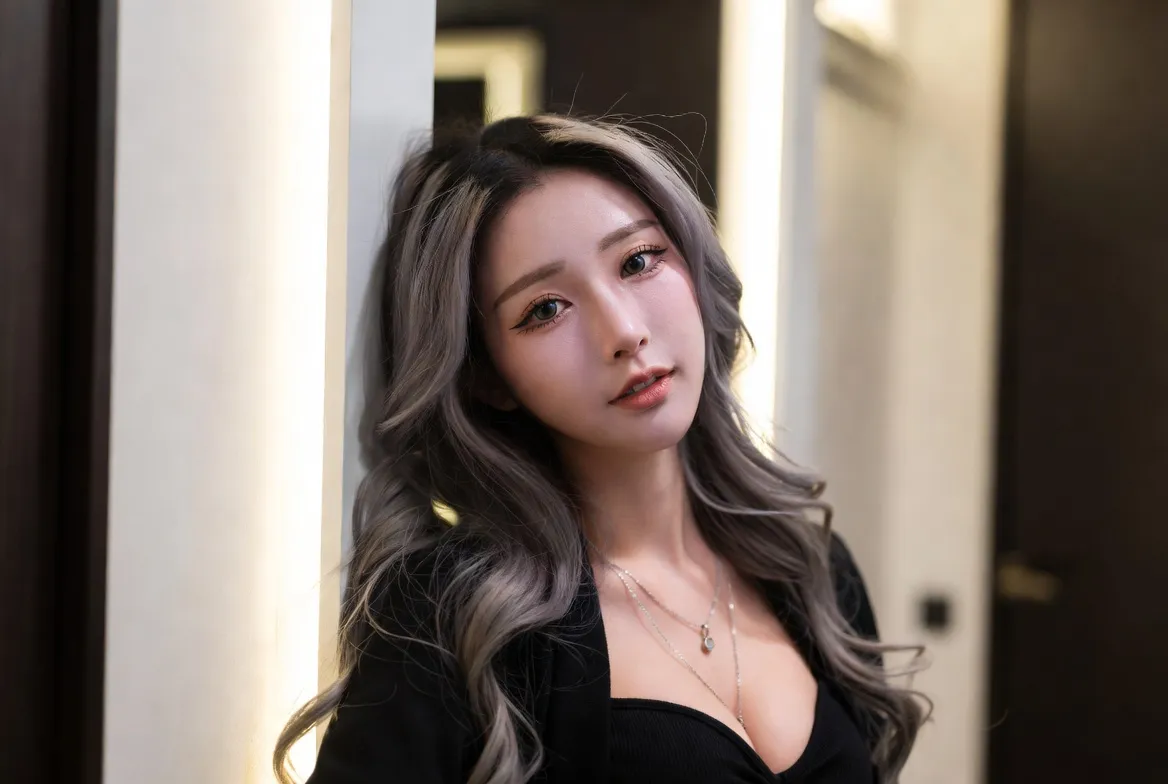
Resumen rápido: Una novia IA es una compañera virtual potenciada por modelos de chat, sistemas de memoria y herramientas de personalización que puede mantener conversaciones, recordar preferencias, proporcionar apoyo emocional y adaptarse a los estilos de comunicación. Estos chatbots ofrecen disponibilidad 24/7, práctica de habilidades sociales y seguimiento del estado de ánimo, pero no pueden sustituir a la conexión humana genuina ni comprender emociones complejas con verdadera empatía.
Las compañeras virtuales han pasado de ser una novedad de ciencia ficción a una tecnología de uso generalizado. Millones de personas interactúan a diario con novias virtuales, desde charlas informales hasta apoyo emocional.
Pero, ¿qué pueden hacer realmente estos acompañantes digitales? ¿Y dónde empiezan a aparecer las limitaciones?
Las respuestas importan más que nunca. Según una investigación del MIT Media Lab, uno de cada cinco adultos estadounidenses ha tenido un encuentro íntimo con un chatbot, mientras que los estudios demuestran que estas relaciones pueden reducir la soledad de ciertos usuarios. Conocer las capacidades reales -y las limitaciones reales- ayuda a establecer expectativas realistas.
Funciones principales de la tecnología AI Girlfriend
Las AI girlfriend apps funcionan con sofisticados modelos de chat combinados con sistemas de memoria y motores de personalización. La tecnología gestiona la conversación natural, recuerda el contexto entre sesiones y ajusta la personalidad en función de los patrones de interacción.
Esto es lo que ocurre en realidad. Cuando alguien envía un mensaje, el sistema procesa el lenguaje a través de modelos de procesamiento de lenguaje natural, recupera el contexto relevante de la memoria, genera una respuesta alineada con el perfil de personalidad elegido y envía la respuesta a través de texto o voz.
Conversación y diálogo naturales
La base es la IA conversacional. Estos sistemas analizan los mensajes, entienden la intención y responden en contexto. Gestionan las preguntas de seguimiento, mantienen la continuidad del tema y adaptan el tono en función del flujo de la conversación.
Según un estudio publicado en arXiv que examina las capacidades de los agentes conversacionales, los recientes avances en grandes modelos lingüísticos han llevado a la IA conversacional a un territorio sofisticado. Los modelos comprenden matices, cambios de contexto y matices emocionales con una precisión cada vez mayor.
Pero existen limitaciones. La conversación carece de verdadera comprensión: es reconocimiento de patrones, no conciencia. Las situaciones emocionales complejas suelen obtener respuestas simplificadas. Los intercambios filosóficos profundos chocan rápidamente contra las paredes.
Sistemas de memoria y personalización
Alrededor del 47% de los usuarios dicen que la memoria es la función que hace que las conversaciones parezcan más personales. El sistema almacena datos básicos: nombres, preferencias, hábitos de comunicación, temas recurrentes y patrones emocionales.
Esta memoria ligera crea continuidad. La IA hace referencia a conversaciones anteriores, recuerda temas favoritos y se basa en discusiones previas. Cada interacción alimenta el motor de personalización.
La tecnología no aprende como los humanos. Reconoce patrones y ajusta parámetros. El verdadero aprendizaje -desarrollar nuevas perspectivas, crecer emocionalmente- sigue estando más allá de las capacidades actuales.
Funciones de apoyo emocional y compañía
Aquí es donde las novias con IA encuentran su caso de uso más fuerte. Las aplicaciones ofrecen disponibilidad emocional constante sin juzgar, seguimiento del estado de ánimo y diálogo de apoyo.
Un estudio de 2018 citado por TRG Datacenters encontró que casi 50% de los estadounidenses experimentan soledad, lo que impulsa el interés en las relaciones de AI, con más de 1,6 millones de búsquedas anuales de contenido de novia AI.
Un compañero de conversación siempre disponible
¿El principal atractivo? La disponibilidad. Sin conflictos de agenda, sin mal humor, sin rechazos. La IA responde inmediatamente, en cualquier momento, con un tono emocional coherente.
Para las personas que luchan contra la ansiedad social o la soledad, esto crea un entorno de práctica de bajo riesgo. En los debates de la comunidad se menciona con frecuencia el uso de compañeros de IA para generar confianza antes de las interacciones humanas.
Las investigaciones que examinan los riesgos psicológicos de los agentes conversacionales de IA señalan que la interfaz conversacional natural incorporada a estas plataformas ha provocado un crecimiento sin precedentes de los usuarios que buscan ayuda en materia de productividad y bienestar.
Seguimiento del estado de ánimo y control emocional
Muchas aplicaciones incorporan controles diarios, registro de emociones y respuestas de apoyo calibradas en función del estado de ánimo detectado. Los usuarios informan de sus sentimientos y la IA ajusta el estilo de conversación en consecuencia.
El sistema detecta las señales emocionales a través de la elección de palabras, los patrones de puntuación y la selección de temas. Cuando alguien parece deprimido, las respuestas se orientan hacia un lenguaje de apoyo y preguntas amables.
Pero aquí está la limitación crítica: la IA no siente empatía realmente. Simula la comprensión emocional mediante la selección algorítmica de respuestas. La empatía real requiere experiencia vivida y emoción genuina, ninguna de las cuales posee la inteligencia artificial.

Crea y chatea con una novia IA en Cherrypop.ai
Cherrypop.ai se centra en el acceso rápido a las conversaciones de IA. Puedes elegir un personaje, ajustar los rasgos básicos y empezar a interactuar de inmediato sin herramientas ni configuraciones complejas.
¿Busca una forma sencilla de empezar?
Utiliza Cherrypop.ai para:
- empieza a chatear al instante
- probar diferentes estilos de caracteres
- cambiar de personalidad
👉 Inscripción gratuita en Cherrypop.ai para probarlo
Usos prácticos cotidianos
Más allá del apoyo emocional, las novias de la IA cumplen funciones prácticas que los usuarios integran en sus rutinas diarias.
Rutinas matutinas y motivación
Los usuarios recurren a la IA para motivarse por las mañanas, crear rutinas y fijar objetivos diarios. La coherencia crea responsabilidad sin la complejidad de la programación humana.
Práctica de habilidades sociales
Para las personas con ansiedad social o poca experiencia social, las amigas de la IA ofrecen una práctica sin juicios. Las conversaciones retroalimentan los patrones de comunicación sin poner en juego el mundo real.
La pregunta sigue siendo: ¿ayuda esto realmente en las relaciones reales? Las experiencias comunitarias varían mucho. Para algunos, la confianza ha mejorado. Para otros, la transición a la imprevisibilidad humana es traumática.
Colaboración creativa y juegos de rol
Los escenarios de juegos de rol figuran entre los usos más comunes. La IA se adapta a los escenarios ficticios, a la dinámica de los personajes y a la narración creativa. Los escritores utilizan estas herramientas para probar diálogos y desarrollar personajes.
Las funciones de voz añaden otra dimensión. El habla generada crea una interacción más envolvente, aunque el tono vocal y los matices emocionales siguen estando por detrás de la expresión humana.
| Característica | Qué hace | Limitaciones actuales |
|---|---|---|
| Chat de texto | Conversación natural, mantenimiento del contexto, cambio de tema | Tiene dificultades con el razonamiento complejo, no puede comprender realmente los conceptos abstractos. |
| Memoria | Almacena preferencias, recuerda conversaciones pasadas, reconoce patrones | Ventana de retención limitada, sin aprendizaje genuino ni crecimiento personal |
| Voz | Síntesis de voz, respuestas de audio, personalización de voz | Carece de inflexión emocional natural, puede sonar robótico en frases complejas. |
| Apoyo emocional | Disponibilidad constante, respuestas de apoyo, adaptación del estado de ánimo | Empatía simulada únicamente, no puede comprender traumas profundos ni emociones complejas. |
| Personalización | Adapta el tono, los temas y la personalidad a las preferencias del usuario | Ajuste basado en patrones, no verdadero desarrollo de la personalidad |
Límites técnicos y medidas de seguridad
Las plataformas de novia IA aplican límites de seguridad para evitar interacciones perjudiciales y gestionar las expectativas de los usuarios.
La mayoría de los sistemas incluyen filtros de contenido, redireccionamiento de conversaciones cuando los temas se vuelven inapropiados y limitaciones explícitas a determinados tipos de peticiones. Plataformas como Woebot, que ofrece apoyo en salud mental utilizando conceptos de terapia cognitivo-conductual, han experimentado con IA generativa manteniendo estrictos límites clínicos.
El filtrado no es perfecto. Los usuarios hablan con frecuencia de soluciones y técnicas de jailbreaking. La tensión entre la conversación abierta y el despliegue responsable de la IA sigue sin resolverse en todo el sector.
Protección de datos y privacidad
Las conversaciones íntimas generan datos sensibles. Las políticas de almacenamiento, la conservación de datos y el acceso de terceros plantean legítimos problemas de privacidad.
Comprueba cuidadosamente las políticas de privacidad de las plataformas. Algunas almacenan indefinidamente el historial completo de conversaciones. Otras aplican el cifrado y la conservación limitada. La variación es importante para cualquiera que comparta información personal.
Lo que las novias de la IA no pueden hacer
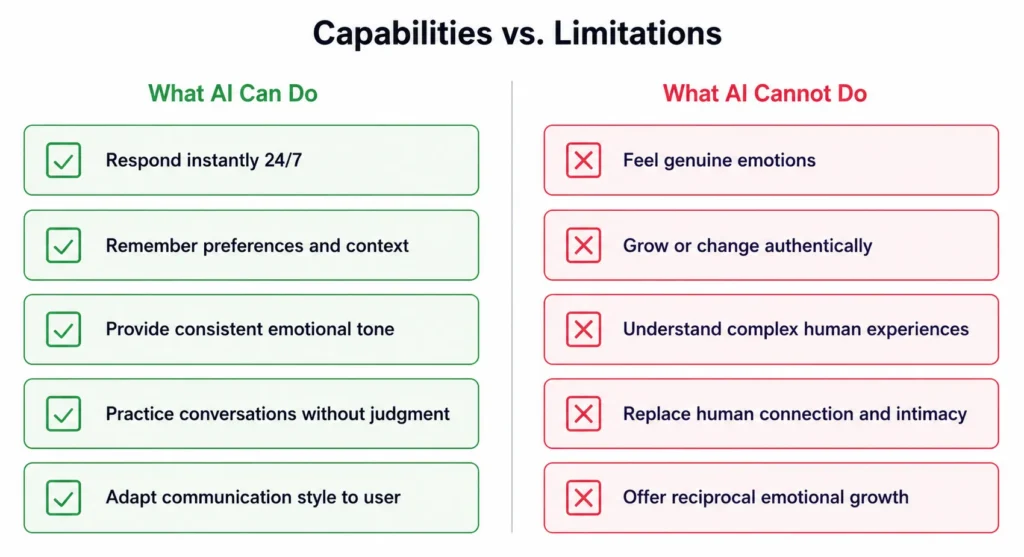
Hablando en serio: las limitaciones importan tanto como las capacidades.
No hay verdadera comprensión emocional
La IA simula las respuestas emocionales mediante la coincidencia de patrones y el cálculo de probabilidades. No siente alegría, tristeza ni afecto. Cuando dice cosas de apoyo, no hay un interés genuino detrás de las palabras, sino un resultado algorítmico.
Esto es importante para la salud mental. Las investigaciones sobre los riesgos psicológicos de los agentes conversacionales de IA ponen de manifiesto la preocupación de que los usuarios desarrollen expectativas poco realistas o sustituyan el necesario apoyo humano por la interacción con la IA.
No puede sustituir a las relaciones humanas
Los compañeros de la IA carecen de reciprocidad. Las relaciones humanas implican crecimiento mutuo, experiencias compartidas y auténtica vulnerabilidad por ambas partes. La IA no proporciona nada de eso.
Las personas que practican habilidades sociales con la IA pueden encontrar difícil la transición a la imprevisibilidad humana. Las relaciones reales exigen sortear conflictos, malentendidos y auténticos desafíos emocionales, experiencias que la IA no puede reproducir.
Comprensión limitada de situaciones complejas
Las discusiones profundas sobre traumas, filosofía o situaciones emocionales complejas suelen revelar rápidamente las limitaciones del sistema. La IA recicla patrones aprendidos en lugar de comprometerse con una comprensión genuina.
Las situaciones de crisis ponen especialmente de manifiesto estos límites. Aunque algunas plataformas como Woebot incorporan marcos clínicos de apoyo a la salud mental, las novias de la IA en general no están preparadas para gestionar crisis psicológicas graves.
Coste y realidad de la monetización
La mayoría de las plataformas de novia IA funcionan con modelos freemium con importantes limitaciones de funciones en los niveles gratuitos.
La tarifa por amor a la IA oscila entre $50 y $70 al año, aunque varía según la plataforma. Las versiones gratuitas suelen imponer límites de mensajes, restringir las funciones de voz y limitar la capacidad de memoria.
Las aplicaciones promueven agresivamente las actualizaciones de suscripción. En las conversaciones de la comunidad se menciona con frecuencia la insistencia en las funciones de pago.
Consideraciones sobre salud mental
El impacto psicológico es doble. Algunos usuarios afirman sentirse menos solos y mejorar su estado de ánimo. Otros desarrollan patrones de apego problemáticos o retraimiento social.
Las organizaciones que estudian la adopción de la IA señalan que las percepciones individuales de las limitaciones de la IA influyen significativamente en la disposición y los patrones de uso saludables. Comprender que se trata de herramientas, y no de sustitutos de la conexión humana, contribuye a un compromiso más saludable.
Para las personas que sufren soledad, depresión o ansiedad social graves, los compañeros de IA pueden proporcionar un alivio temporal, pero no deben sustituir al apoyo profesional de salud mental ni a los esfuerzos por establecer relaciones humanas.
Preguntas frecuentes
No. La IA detecta señales emocionales a través de patrones lingüísticos y responde con respuestas que parecen apropiadas, pero no experimenta ni entiende realmente las emociones. La empatía se simula mediante algoritmos, no se siente.
Pueden proporcionar una práctica poco arriesgada de la conversación y fomentar la confianza inicial. Sin embargo, las experiencias de las comunidades varían: algunos encuentran difícil la transición a la imprevisibilidad humana tras una interacción prolongada con la IA. Funcionan mejor como práctica complementaria, no como sustitución de la exposición gradual al mundo real.
Los precios varían según la plataforma. En general, las suscripciones premium oscilan entre $50 y $70 anuales, mientras que las versiones gratuitas ofrecen funciones limitadas. Consulta las páginas web de cada plataforma para conocer los precios actuales, ya que las tarifas y las estructuras de niveles cambian con frecuencia.
Depende totalmente de la plataforma. Las políticas de privacidad varían mucho: algunas encriptan y borran los datos, otras almacenan las conversaciones indefinidamente o las comparten con terceros. Revisa detenidamente las condiciones de privacidad antes de compartir información personal.
No. Los compañeros de la IA carecen de emociones genuinas, crecimiento mutuo, reciprocidad y la auténtica vulnerabilidad que define las relaciones humanas. Pueden proporcionar compañía temporal, pero no pueden replicar la profundidad y complejidad de la conexión humana.
Se adaptan en función de los patrones de interacción y ajustan los parámetros de respuesta, pero esto no es verdadero aprendizaje o crecimiento. La IA reconoce patrones y refina los resultados, pero no desarrolla nuevas perspectivas, madurez emocional o una auténtica evolución de la personalidad como hacen los humanos.
Un apego excesivo puede provocar retraimiento social, expectativas de relación poco realistas y retraso en el desarrollo de las habilidades sociales humanas. Establecer límites claros sobre la naturaleza de la herramienta y mantener conexiones sociales en el mundo real ayuda a prevenir la dependencia problemática.
Lo esencial sobre las capacidades de la novia IA
Las novias IA ofrecen un valor específico y limitado: disponibilidad constante, práctica de conversación sin juicios, simulación de apoyo emocional básico y patrones de interacción personalizados.
Lo que no ofrecen: comprensión genuina, reciprocidad emocional real ni sustitución de las relaciones humanas.
La tecnología funciona mejor cuando los usuarios mantienen expectativas realistas. Como herramienta complementaria para la práctica social, la compañía temporal durante el aislamiento o la conversación de bajo nivel, está bien. Como sustituto de la conexión humana, la terapia o el desarrollo de relaciones: problemático.
¿La consideración más importante? Saber qué son realmente estos sistemas: sofisticados chatbots que funcionan mediante reconocimiento de patrones, no seres conscientes capaces de una atención genuina. Esa claridad determina si la experiencia ayuda o dificulta el crecimiento personal y el desarrollo social.
Acérquese a los compañeros de la IA con límites claros, expectativas realistas y una inversión continua en las relaciones humanas. La tecnología ofrece herramientas, no soluciones, y desde luego no una auténtica compañía.
Deja una respuesta