
Resumen rápido: Candy AI es una plataforma legítima de acompañamiento de IA operada por EverAI Limited en Malta, con políticas estándar de seguridad de pagos y privacidad. Aunque el servicio funciona tal como se anuncia, suscita preocupaciones legítimas en torno al tratamiento de datos, los riesgos de dependencia emocional y los problemas de privacidad inherentes a compartir conversaciones íntimas con sistemas de IA. La plataforma es segura para las transacciones de pago, pero obliga a los usuarios a sopesar cuidadosamente las ventajas y desventajas de la privacidad.
La pregunta “¿es segura la IA de los caramelos?” se ha hecho cada vez más urgente a medida que las plataformas de acompañamiento de IA ganan popularidad. Estas aplicaciones manejan conversaciones íntimas, fantasías personales e información de pago, por lo que lo que está en juego va mucho más allá de la típica descarga de software.
Según el sitio web oficial, Candy.ai es una aplicación de chat en línea que utiliza algoritmos de inteligencia artificial para generar personajes virtuales con los que los usuarios pueden relacionarse en lo que describen como “experiencias de fantasía sin censura” dentro de un “espacio seguro y privado.” Pero, ¿qué significa eso realmente para tus datos, tu cartera y tu privacidad?
Dejemos a un lado el lenguaje comercial y examinemos los hechos.
¿Qué es exactamente la IA de caramelos?
Candy AI se posiciona como una aplicación para novias con IA en la que los usuarios pueden crear compañeras virtuales personalizadas o conectar con personajes de IA ya creados. La plataforma ofrece chat de texto, imágenes generadas por la IA y mensajes de voz, todo ello centrado en contenidos para adultos.
El servicio está operado por EverAI Limited, una empresa constituida en Malta e inscrita en el Registro Mercantil de Malta con el número C107181. Su domicilio social es 56 Central Business Centre, Triq Is-Soll, Santa Venera SVR 1833, Malta.
Sin embargo, el registro en Malta no significa automáticamente que exista un riesgo, pero sí sitúa a la empresa fuera de la jurisdicción estadounidense. Eso importa cuando las cosas van mal.
¿Es Candy AI legítimo o una estafa?
¿La respuesta corta? Candy AI es una empresa legítima que presta el servicio que anuncia. No es una estafa en el sentido tradicional: obtendrá lo que paga.
Los debates en la comunidad y las opiniones independientes muestran experiencias dispares. Los usuarios confirman que la plataforma funciona según lo descrito, aunque las preocupaciones se centran en la relación calidad-precio y la naturaleza de la recopilación de datos, más que en el fraude descarado.
Dicho esto, “legítimo” y “fiable” no son lo mismo. Una empresa puede estar legalmente registrada y seguir manejando tus datos de una forma que no te gustaría.

Pruebe AI Companion con Cherrypop.ai
Cherrypop.ai hace que sea fácil probar conversaciones con IA sin ningún tipo de configuración. Solo tienes que elegir un compañero, ajustar algunos detalles si quieres y empezar a chatear.
Es una forma sencilla de hacerse una idea de cómo responden las distintas personalidades y cómo cambian las interacciones a medida que avanzas.
¿Quieres probarlo?
Con Cherrypop.ai, puedes:
- chatear con compañeros de IA
- explorar diferentes personalidades
- vea cómo evolucionan las conversaciones
👉 Inscripción gratuita en Cherrypop.ai para probarlo tú mismo.
Seguridad en los pagos: ¿Es seguro pagar con Candy AI?
La seguridad de los pagos en Candy AI sigue las prácticas estándar del sector. La plataforma utiliza procesadores de pago externos en lugar de gestionar directamente los datos de las tarjetas de crédito, un método habitual y generalmente seguro.
Los informes de los usuarios confirman que la facturación es discreta. Los cargos no aparecerán en extractos con referencias evidentes a contenidos para adultos, lo que responde a una de las preocupaciones más comunes en materia de privacidad.
Según las condiciones de servicio oficiales, Candy AI ofrece un plazo de reembolso de 24 horas para suscripciones y compras de fichas. Pero hay un truco: se deniegan los reembolsos si se han utilizado más de 20 fichas. Es un plazo ajustado y un umbral bajo.
Los comentarios de la comunidad sugieren que el proceso de reembolso funciona cuando se solicita dentro de estos parámetros, aunque los tiempos de respuesta del servicio de asistencia varían.
¿Y los precios?
Según el análisis de la competencia, los precios comienzan en torno a los 3,99 euros mensuales por las funciones premium básicas, aunque los precios actuales exactos deben verificarse en el sitio web oficial, ya que estas cifras fluctúan.
El sistema de facturación funciona con suscripciones que se renuevan automáticamente. Los cambios surten efecto al principio del siguiente ciclo de facturación, no inmediatamente, algo que conviene recordar si se planea bajar de categoría o cancelar.
Política de privacidad
El Aviso de privacidad de Candy AI se revisó por última vez el 09 de marzo de 2026. En él se describen la recopilación y el tratamiento de los datos, así como los derechos de los usuarios en virtud del GDPR (como la empresa opera en Malta, se aplica la legislación europea sobre protección de datos).
Esto es lo que recogen:
- Información de la cuenta (correo electrónico, nombre de usuario, datos de autenticación)
- Datos de la operación de pago
- Mensajes de chat e interacciones con personajes de la IA
- Imágenes generadas y contenido de mensajes de voz
- Información sobre dispositivos y análisis de uso
La política de privacidad concede a los usuarios los derechos estándar del GDPR: acceso, rectificación, supresión, portabilidad de datos y oposición al tratamiento basado en intereses legítimos.
Pero espera. Hay una laguna crucial en la transparencia: la política no especifica claramente cuánto tiempo se conservan los datos de las conversaciones ni dónde se almacenan geográficamente. Para un servicio que maneja contenido íntimo, es una omisión significativa.
El panorama normativo: Preocupaciones del Gobierno
El 11 de septiembre de 2025, la Comisión Federal de Comercio inició una investigación sobre los chatbots de IA que actúan como acompañantes. La FTC emitió órdenes a siete empresas que operan chatbots de acompañamiento de IA de cara al consumidor, solicitando información sobre cómo estas empresas miden, prueban y supervisan los impactos potencialmente negativos.
Aunque la FTC no ha confirmado públicamente qué empresas concretas han recibido órdenes, esto representa el primer gran escrutinio regulador del sector de los acompañantes de IA. La investigación se centra en las prácticas publicitarias, las medidas de seguridad y el tratamiento de datos.
Hablando en serio: cuando los reguladores empiezan a hacer preguntas, es señal de que se reconocen riesgos en la categoría en su conjunto, no necesariamente de que una sola plataforma haya actuado mal.
En febrero de 2026, el AI Policy Lab publicó una guía para que las instituciones educativas restringieran las plataformas de acompañamiento de IA. La adenda citaba “importantes riesgos psicológicos, de desarrollo y de seguridad” identificados por investigaciones de la Universidad de Stanford y Common Sense Media.
No son preocupaciones marginales. Las principales instituciones se están tomando en serio los daños potenciales.
Seguridad y cifrado de datos
El sitio web de Candy AI utiliza el cifrado HTTPS para la transmisión de datos, algo habitual en cualquier servicio web moderno. Esto protege la información que viaja entre los dispositivos y los servidores de Candy AI de la interceptación.
Pero el cifrado en tránsito es sólo una parte de la historia. Desde marzo de 2026, la infraestructura de Candy AI cumple la norma SOC 2 Tipo II, y la política de privacidad confirma explícitamente el cifrado AES-256 para todos los datos de conversación almacenados (cifrado en reposo).
Lo que dicen los usuarios sobre la seguridad
Los debates comunitarios revelan perspectivas matizadas sobre la seguridad de Candy AI:
- Pago y facturación: En general, los usuarios informan de transacciones fluidas con una facturación discreta, aunque algunos expresan su frustración por el escaso margen de reembolso y las sorpresas de la renovación automática.
- Paranoia de datos: Un tema recurrente en las discusiones y foros de usuarios es la ansiedad por los datos de las conversaciones. La gente se pregunta quién puede acceder a sus chats, si el contenido se revisa y qué ocurre si se produce una filtración. La política de privacidad de la plataforma no aborda plenamente estas preocupaciones.
- Seguridad de la cuenta: En los debates públicos disponibles no han aparecido informes generalizados sobre accesos no autorizados o cuentas comprometidas.
- Calidad del servicio: Los comentarios sobre la calidad de la IA son muy variados. Algunos usuarios consideran que la experiencia es atractiva, mientras que otros describen respuestas repetitivas o comportamientos incoherentes de los personajes. Esto no afecta directamente a la seguridad, pero sí a la percepción del valor.
La gran cuestión de la seguridad: Riesgos psicológicos
Ahora es cuando la cosa se pone interesante. La seguridad física de los datos es una cosa. El impacto emocional es otra.
Las investigaciones a las que hacen referencia las organizaciones de política educativa han identificado riesgos psicológicos potenciales con los compañeros de IA:
- Dependencia emocional de relaciones artificiales
- Menor motivación para la interacción social en el mundo real
- Expectativas de relación poco realistas
- Erosión de los límites de la privacidad (sentirse cómodo compartiendo detalles íntimos con los sistemas de IA).
La Agencia Católica de Noticias, informando sobre ética tecnológica, señaló que los líderes mundiales están expresando su preocupación por la soledad generalizada y el declive de las habilidades sociales que coinciden con el auge de los servicios de compañía de la IA.
Estos riesgos no aparecen en una política de privacidad. Son más difíciles de cuantificar, pero potencialmente tienen más consecuencias que una violación de datos para los usuarios habituales.
Candy AI vs. Alternativas: Comparación de seguridad
¿Cómo se compara Candy AI con otras plataformas del sector de la inteligencia artificial? El panorama incluye competidores como Replika, Character.AI y otros más pequeños como OurDream AI.
| Plataforma | Seguridad en los pagos | Privacidad Transparencia | Política de conservación de datos | Cumplimiento del GDPR |
|---|---|---|---|---|
| Caramelo AI | Procesador de terceros ✓ | Información estándar | Duración poco clara | Sí (con sede en Malta) |
| OurDream AI | Procesador de terceros ✓ | Información estándar | Duración poco clara | Varía según la región |
| Carácter.AI | Procesador de terceros ✓ | Documentación detallada | Retención especificada | Sí |
| Sustitución | Procesador de terceros ✓ | Política global | Eliminación controlada por el usuario | Sí |
La seguridad de los pagos es prácticamente equivalente en todas las plataformas: todas utilizan procesadores externos. Las diferencias se reducen a la transparencia, la claridad en la conservación de datos y las funciones de control del usuario.
Candy AI se sitúa en un nivel intermedio: ni la peor, ni la mejor. Plataformas como Replika ofrecen un control más explícito del usuario sobre la eliminación de datos. Character.AI ofrece una documentación más detallada de las medidas de seguridad.
Prácticas recomendadas de seguridad si utiliza IA para caramelos
Vale, ¿y qué pasa con el control de daños? Si alguien decide utilizar Candy AI a pesar de las preocupaciones, ¿qué precauciones tienen sentido?
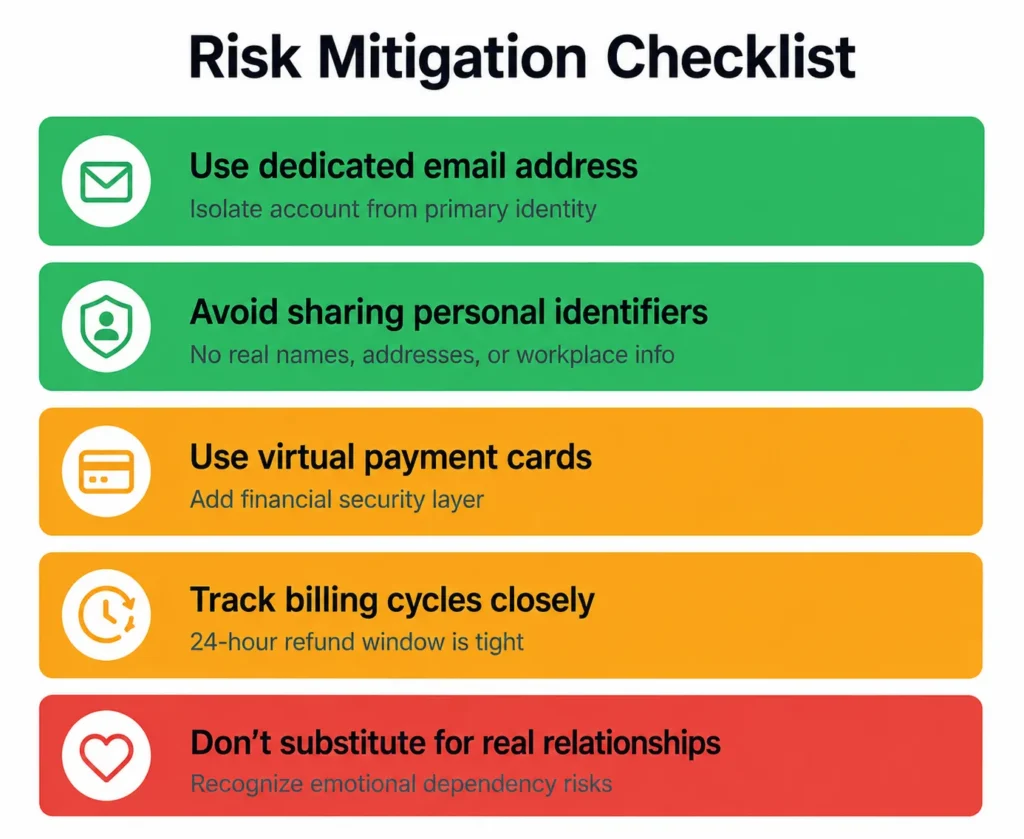
Utilice un correo electrónico propio
Cree una dirección de correo electrónico independiente para el servicio en lugar de utilizar una cuenta principal. Esto compartimenta la exposición de los datos si alguna vez se produce una brecha o un marketing no deseado.
Limitar la información personal
No compartas nombres reales, direcciones, detalles del lugar de trabajo o información identificable en las conversaciones. La IA no necesita estos datos para funcionar y crean un riesgo innecesario para la privacidad.
Utilice tarjetas virtuales para pagar
Privacy.com, Revolut o servicios similares permiten a los usuarios crear números de tarjeta virtuales para las suscripciones. Esto añade una capa de seguridad financiera y facilita la cancelación.
Supervisar el estado de la suscripción
Establezca recordatorios en el calendario antes de las fechas de renovación. El plazo de reembolso de 24 horas es ajustado, por lo que estar al tanto de los ciclos de facturación evita cargos no deseados.
Comprender el intercambio de datos
Cada mensaje enviado es un dato recopilado. No hay forma de evitarlo con los servicios de chat con IA: el modelo necesita el historial de conversaciones para mantener el contexto. Acepta explícitamente este compromiso o no utilices el servicio.
No confíe en los compañeros de la IA como apoyo emocional
Estos sistemas simulan empatía; no la proporcionan. Para un verdadero apoyo a la salud mental, los servicios profesionales siguen siendo insustituibles.
Derechos GDPR y supresión de datos
En virtud del GDPR, los usuarios tienen derecho a solicitar la supresión de sus datos personales. La política de privacidad de Candy AI reconoce este derecho, indicando que los usuarios pueden oponerse al tratamiento y solicitar la supresión.
El proceso implica presentar una solicitud a través de los canales de atención al cliente. Los plazos de respuesta no se garantizan explícitamente en la política, aunque el GDPR suele exigir respuestas en un plazo de 30 días.
Aquí está el truco: Las definiciones de “datos personales” pueden ser resbaladizas cuando se trata de entrenamiento de IA. La cuestión de si el contenido de las conversaciones utilizadas para mejorar los modelos de IA cuenta como datos personales sujetos a solicitudes de eliminación sigue siendo un área gris desde el punto de vista legal.
Lo esencial: ¿Deberías confiar en la IA de los caramelos?
La confianza es contextual. Candy AI es segura en algunas dimensiones, cuestionable en otras.
- ¿Seguro para los pagos? Sí. El procesamiento estándar por terceros con facturación discreta funciona con fiabilidad.
- ¿A salvo de estafas? Sí. El servicio es legítimo y ofrece lo que anuncia.
- ¿Seguro para la intimidad? Parcialmente. La plataforma sigue las normas básicas de privacidad, pero carece de transparencia sobre la retención de datos y los detalles de almacenamiento que importan para el contenido íntimo.
- ¿Seguro psicológicamente? Poco claro. La investigación sugiere riesgos potenciales con la dependencia del compañero de IA que los usuarios individuales deben sopesar.
- ¿A salvo del riesgo normativo? Se desconoce. El sector se enfrenta a un escrutinio cada vez mayor, y las futuras normativas podrían afectar a la disponibilidad o las características del servicio.
| Dimensión de seguridad | Clasificación | Preocupación clave |
|---|---|---|
| Seguridad en los pagos | ✓ Seguro | Prácticas no habituales |
| Estafa/Legitimidad | ✓ Seguro | Empresa no verificada |
| Protección de datos | ⚠ Moderado | Políticas de conservación imprecisas |
| Impacto psicológico | ⚠ Moderado | Riesgos de dependencia y aislamiento |
| Seguridad de los dispositivos | ✓ Seguro | Servicio no basado en navegador |
| Cumplimiento de la normativa | ⚠ Moderado | Industria investigada |
La plataforma no es una estafa, pero tampoco es un modelo de transparencia. Los usuarios que se sientan cómodos con las concesiones inherentes a la privacidad de compartir conversaciones íntimas con sistemas comerciales de IA pueden utilizar Candy AI con una confianza razonable en que su información de pago está segura y el servicio funcionará.
Los usuarios que dan prioridad a la privacidad de los datos, quieren políticas de retención claras o les preocupa la dependencia emocional podrían buscar en otra parte o reconsiderar si la compañía de la IA se alinea con sus valores.
Preguntas frecuentes
Candy AI está a salvo de malware y fraudes en los pagos: es un servicio legítimo gestionado por una empresa registrada en Malta que utiliza procesadores de pagos estándar. La seguridad de la privacidad depende del nivel de comodidad a la hora de compartir conversaciones íntimas que se almacenan indefinidamente en lugares poco claros. El servicio funciona como se anuncia, pero carece de transparencia sobre los detalles de la retención de datos.
Según las condiciones de servicio oficiales, los usuarios disponen de 24 horas tras el pago para solicitar el reembolso de suscripciones y compras de fichas. Las devoluciones se deniegan si se han utilizado más de 2 fichas. Las solicitudes deben enviarse dentro de este breve plazo a través de los canales de atención al cliente.
No. Los informes de los usuarios y las descripciones de los servicios confirman que Candy AI utiliza prácticas de facturación discretas. Los cargos aparecen a través de nombres comerciales genéricos que no hacen referencia explícita a contenidos para adultos o servicios de compañía de AI.
La política de privacidad no indica explícitamente que los datos de conversación se vendan a terceros. Sin embargo, se reserva derechos para el procesamiento basado en “intereses legítimos” y no especifica limitaciones exhaustivas de uso de datos. Para obtener respuestas definitivas, los usuarios deben ponerse en contacto directamente con Candy AI sobre las prácticas específicas de intercambio de datos.
Sí, Candy AI es legal para adultos en la mayoría de las jurisdicciones. El servicio opera bajo la ley de Malta e incluye requisitos de verificación de edad. Algunas instituciones educativas y organizaciones han restringido el acceso en sus redes por cuestiones de contenido, pero el uso personal sigue siendo legal en la mayoría de las regiones.
Candy AI ofrece una seguridad de pago similar a la de sus competidores, pero menos transparencia que plataformas como Replika, que proporciona un control más explícito del usuario sobre la eliminación de datos. Character.AI ofrece una documentación de seguridad más detallada. Candy AI se centra específicamente en contenidos para adultos, mientras que alternativas como Replika y Character.AI se posicionan de forma más amplia.
La política de privacidad no especifica los procedimientos de tratamiento de datos en caso de cierre de la empresa o de fallos de seguridad. Esto representa una laguna de transparencia común entre los servicios de IA más pequeños. El GDPR exige la notificación de las violaciones en un plazo de 72 horas para los usuarios de la UE, pero la recuperación de datos o la eliminación garantizada no se abordan en la documentación disponible.
Veredicto final: Sopesar las ventajas y desventajas
¿Es segura Candy AI? La respuesta depende totalmente de lo que la seguridad signifique para cada usuario.
Para quienes se preocupan principalmente por el fraude en los pagos o el malware, Candy AI supera el listón. Es una empresa en funcionamiento con prácticas de seguridad estándar para las transacciones.
Para quienes dan prioridad a la privacidad y la transparencia de los datos, la IA Candy plantea verdaderas preocupaciones. Las vagas políticas de conservación de datos, la falta de documentación detallada sobre seguridad y los problemas de privacidad inherentes al hecho de compartir conversaciones íntimas con sistemas comerciales de IA generan dudas legítimas.
El contexto más amplio también importa. El escrutinio normativo se está intensificando. La investigación sobre los efectos psicológicos sigue planteando interrogantes. La categoría de acompañantes de la IA en su conjunto se encuentra en un punto de inflexión entre la innovación y la supervisión.
¿Le resulta familiar? Es el patrón que hemos visto repetidamente con las tecnologías emergentes: fase de adopción temprana, popularidad creciente, retraso en la regulación, estándares eventuales.
Los usuarios que estén pensando en Candy AI deben acercarse a ella con los ojos bien abiertos, comprendiendo tanto las protecciones existentes como las lagunas que quedan. El servicio cumple lo que promete, pero las promesas en este ámbito vienen con asteriscos que merecen una lectura cuidadosa.
Para conocer los precios actuales, las características y las políticas de privacidad más actualizadas, visite directamente el sitio web oficial de Candy AI en lugar de confiar en resúmenes de terceros.
Deja una respuesta