
Resumen rápido: La mayoría de las plataformas de IA convencionales, como ChatGPT, Claude y Gemini, prohíben la generación de contenidos para adultos en sus políticas de uso. Sin embargo, las herramientas y plataformas de IA especializadas -incluida Stable Diffusion con modelos personalizados, CivitAI y servicios dedicados como Candy.AI y SoulGen- permiten explícitamente o están diseñadas para crear contenidos para adultos generados por IA, aunque aplican distintos filtros de seguridad y restricciones de contenido.
La intersección de la inteligencia artificial y los contenidos para adultos representa una de las fronteras tecnológicas más debatidas de 2026. Mientras las grandes empresas tecnológicas trazan líneas duras contra la pornografía en sus productos de IA, ha surgido un ecosistema paralelo de plataformas especializadas.
Comprender qué IA permite el porno requiere navegar por un complejo panorama de políticas de uso, marcos éticos y capacidades técnicas. La respuesta no es sencilla: depende de si hablamos de plataformas comerciales convencionales o de generadores especializados de contenidos para adultos.
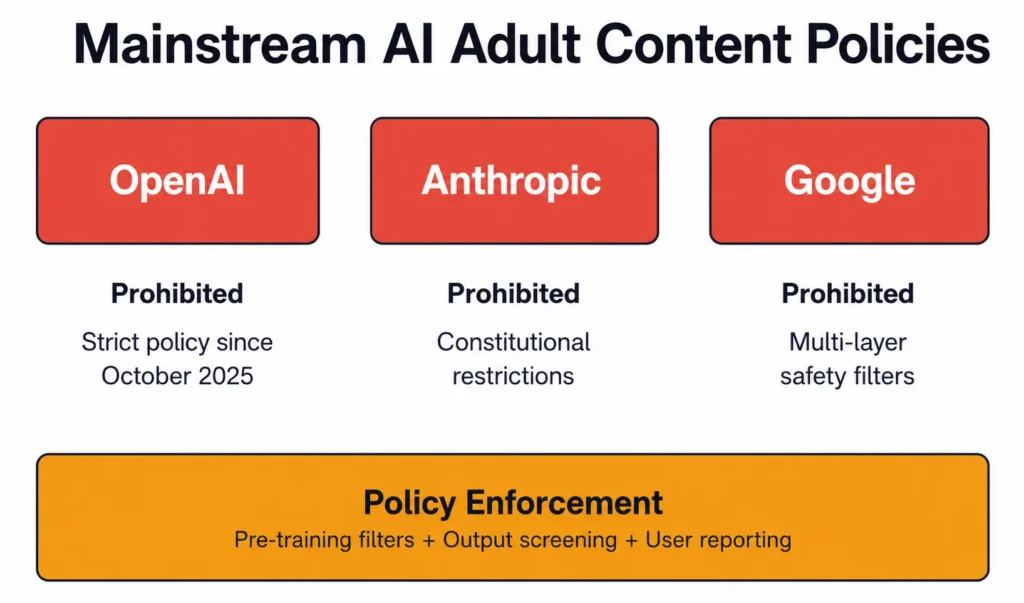
Plataformas principales de IA: Prohibición universal
Los grandes nombres de la inteligencia artificial mantienen prohibiciones estrictas contra los contenidos para adultos. OpenAI, Anthropic y Google han implantado políticas exhaustivas que desautorizan explícitamente la generación de material pornográfico.
ChatGPT de OpenAI y las restricciones de DALL-E
Las políticas de uso de OpenAI, en vigor desde octubre de 2025, prohíben categóricamente la creación de contenidos para adultos. Según las políticas publicitarias oficiales de OpenAI publicadas el 20 de marzo de 2026, actualmente no se permiten los anuncios de contenidos o servicios para adultos, incluidas las apps de citas, los servicios o productos sexuales y las apps de compañía para adultos.
Sin embargo, incluso los suscriptores premium de ChatGPT que pagan $20 al mes se enfrentan a estas restricciones. Los debates de la comunidad de octubre de 2025 muestran la frustración de los usuarios con lo que describen como filtros excesivamente restrictivos.
La política permite técnicamente el desnudo artístico en determinados contextos, pero su aplicación sigue siendo conservadora. Los usuarios informan de que incluso los proyectos legítimos de escritura creativa activan los filtros de seguridad cuando incluyen temas maduros.
Anthropic's Claude: Restricciones constitucionales
El enfoque de Anthropic se centra en su “Constitución de Claude”, que moldea el comportamiento del modelo a través de la formación. Su política de uso, actualizada el 15 de agosto de 2025, refleja las crecientes capacidades del producto al tiempo que mantiene unos límites claros en torno al contenido sexual.
El entrenamiento de Claude incorpora valores específicos que desalientan la generación de material explícito. A diferencia de los sistemas que se basan únicamente en el filtrado de la salida, las restricciones de Claude están integradas más profundamente en los patrones de respuesta del modelo.
Barreras de seguridad Gemini e Imagen de Google
La Política de uso prohibido de la IA generativa de Google, modificada por última vez el 17 de diciembre de 2024, restringe explícitamente las actividades peligrosas o ilegales. Su documentación Imagen describe las consideraciones de IA responsable, incluidos los filtros de seguridad configurables que impiden la generación de contenido para adultos.
No se trata sólo de políticas corporativas: se aplican técnicamente a través de múltiples capas de moderación de contenidos, filtrado de datos previo a la formación y filtrado de resultados en tiempo real.
Cherrypop.ai: Prueba un chat de novia con IA

Cherrypop.ai te permite explorar una serie de compañeros de IA en un solo lugar. Puedes moverte entre ellos, modificar su comportamiento y ver cómo se desarrolla cada conversación.
Es una forma sencilla de experimentar sin entrar en detalles técnicos.
¿Tiene curiosidad por saber qué se siente?
Con Cherrypop.ai, puedes:
- explorar diferentes personalidades de la IA
- personalizar su comportamiento
- ver cómo evolucionan los chats con el tiempo
👉 Inscripción gratuita en Cherrypop.ai para probarlo tú mismo.
Plataformas de IA que permiten contenidos para adultos
Hablando en serio: si la IA convencional no genera contenidos para adultos, ¿a quién recurrir? Ha surgido un importante ecosistema de plataformas especializadas, desde modelos de código abierto hasta servicios comerciales diseñados explícitamente para contenidos NSFW.
Modelos de código abierto: Difusión estable y más allá
Stable Diffusion representa la opción de código abierto más significativa. A diferencia de los sistemas patentados, Stable Diffusion puede ejecutarse localmente con modelos personalizados entrenados con contenidos para adultos.
El modelo en sí no permite o rechaza la pornografía de forma inherente, eso depende totalmente de cómo se despliegue. Las plataformas comerciales que alojan Stable Diffusion (como DreamStudio) aplican filtros de seguridad. Pero los desarrolladores que ejecutan instalaciones locales no se enfrentan a tales restricciones.
Las plataformas comunitarias como CivitAI albergan miles de modelos personalizados, incluidos muchos diseñados específicamente para generar imágenes para adultos. Estos modelos operan en zonas legales grises, aplicando políticas de contenido voluntarias que varían ampliamente en restricción.
Plataformas comerciales de IA para adultos
Varias plataformas comerciales han construido modelos de negocio enteros en torno a contenidos para adultos generados por IA. Estos servicios no ocultan su propósito: comercializan activamente la generación de contenidos para adultos como su principal característica.
Según un análisis de los principales sitios de porno con IA, plataformas como Candy.AI, SoulGen y OurDreamAI ofrecen acceso por suscripción a generadores de imágenes especializados. Los precios varían según la plataforma.
Estas plataformas aplican sus propias restricciones de contenido: prohíben los contenidos ilegales, como el material de abuso sexual infantil, pero permiten las imágenes consentidas de adultos. Muchas cuentan con amplias bibliotecas de imágenes y fuentes continuas de contenidos, que combinan la personalización con el descubrimiento.
| Tipo de plataforma | Política de contenidos para adultos | Método de acceso | Coste típico |
|---|---|---|---|
| ChatGPT | Estrictamente prohibido | API/Interfaz oficial | $20/mes |
| Claude | Estrictamente prohibido | API/Interfaz oficial | Varía según el nivel |
| Difusión estable (local) | Discreción del usuario | Instalación autónoma | Gratuito (costes de hardware) |
| CivitAI | Permitido con filtros | Plataforma web | Gratuito/Premium |
| Sitios porno especializados en IA | Objetivo principal | Servicio de suscripción | $5.99-$12.99/month |
La realidad técnica de la generación de porno con IA
¿Cómo funciona exactamente la pornografía generada por IA? La base técnica varía en función de la plataforma y el enfoque utilizados.
Tecnologías de generación de imágenes
La mayor parte del porno de IA se basa en modelos de difusión, la misma tecnología que hay detrás de Stable Diffusion, Midjourney y DALL-E. Estos modelos aprenden las relaciones estadísticas entre las descripciones de texto y las características visuales entrenándose con conjuntos de datos masivos de imágenes.
La diferencia clave: los generadores de contenido para adultos se entrenan en conjuntos de datos que incluyen imágenes explícitas, o afinan los modelos existentes utilizando contenido para adultos. Esta formación especializada permite generar imágenes pornográficas a partir de indicaciones textuales.
Según un análisis de contenido cuantitativo publicado en septiembre de 2025 en Archives of Sexual Behavior, el análisis de 390 mensajes de Reddit reveló que la producción (59,5%) era un tema dominante en las discusiones de los usuarios.
Tecnología Deepfake y generación de vídeo
Los deepfakes representan una aplicación especialmente controvertida. Según una investigación académica, la BBC informó de que 96% de las películas deepfake son pornografía, y más de 90% de esa pornografía deepfake están protagonizadas por mujeres.
No se trata de estadísticas hipotéticas, sino de patrones documentados de creación no consentida de imágenes sexuales. La tecnología permite el intercambio de rostros que coloca a las personas en contenidos pornográficos sin su permiso.
La generación de vídeo sigue siendo técnicamente más difícil que la de imágenes estáticas. Pero las plataformas ofrecen cada vez más contenidos de vídeo generados por IA junto con la generación de imágenes, ampliando el alcance de los medios sintéticos para adultos.
Generación de textos y acompañantes de IA
Más allá de los contenidos visuales, las plataformas de IA basadas en texto ofrecen chatbots y acompañantes virtuales orientados a los adultos. Estos servicios utilizan grandes modelos lingüísticos adaptados a las conversaciones románticas o sexuales.
Algunas plataformas se posicionan como alternativas a las citas tradicionales, ofreciendo compañeros de IA “perfectos” que se adaptan a las preferencias del usuario. Los debates de la comunidad las describen como espacios de exploración libres de prejuicios.
Consideraciones éticas y jurídicas
La cuestión de qué IA permite el porno se convierte rápidamente en la de qué IA debería permitirlo. El panorama ético es complicado, controvertido y evoluciona rápidamente.
Creación de contenidos no consentidos
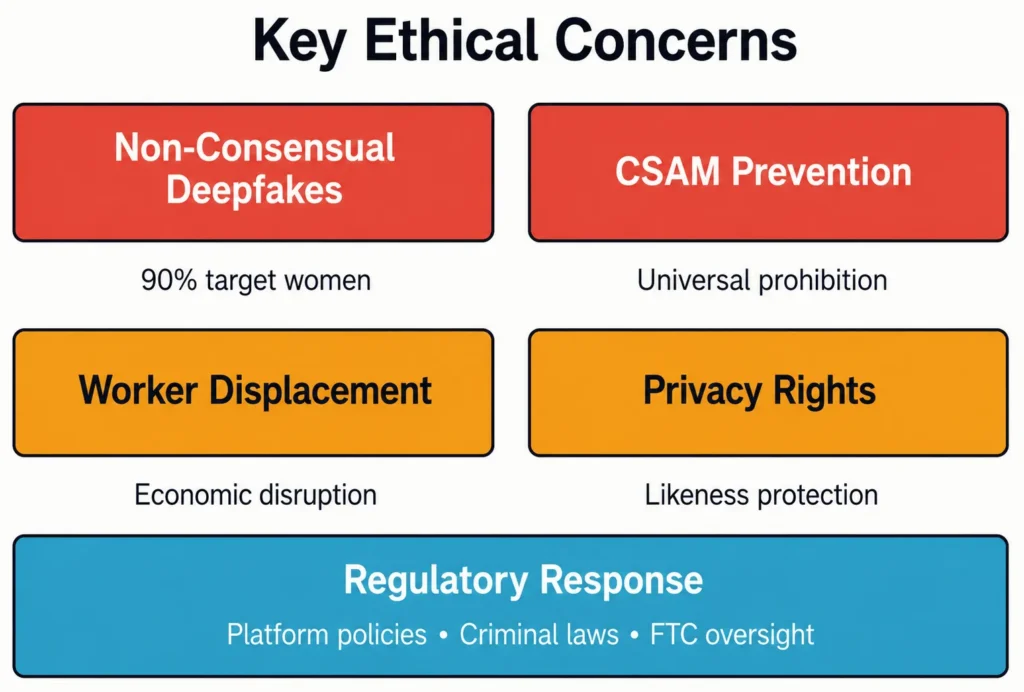
La preocupación ética más grave se centra en las imágenes no consentidas, falsificaciones que muestran a personas reales en situaciones sexuales sin permiso. Esta práctica ha sido ampliamente documentada, especialmente en el caso de mujeres de la vida pública.
Algunas jurisdicciones han empezado a penalizar la pornografía deepfake no consentida. Pero la aplicación de la ley sigue siendo difícil dada la naturaleza descentralizada de las herramientas de IA y la Internet global.
Incluso el uso privado de la IA para generar imágenes pornográficas de personas reales sin consentimiento plantea profundas cuestiones morales sobre la dignidad, la privacidad y la autonomía sexual.
Seguridad infantil y prevención de la violencia doméstica
El material de abuso sexual infantil generado por IA representa una línea roja absoluta para todas las plataformas legítimas. Tanto los principales proveedores de IA como los servicios orientados a adultos aplican prohibiciones estrictas.
El reto técnico: distinguir el CSAM generado por IA de los contenidos legítimos preservando la privacidad. La mayoría de las plataformas emplean varios niveles de detección, como el filtrado de avisos, el filtrado de resultados y los mecanismos de notificación por parte de los usuarios.
La investigación académica sobre la gobernanza de la pornografía con IA, publicada en febrero de 2026, conceptualiza la gobernanza de las plataformas como un “arbitraje de fantasías”: el proceso de determinar qué fantasías pueden realizarse tecnológicamente dentro de unos límites legales y éticos.
Preocupación por el desplazamiento de los trabajadores del sexo
La industria del entretenimiento para adultos da trabajo a millones de personas en todo el mundo. La pornografía generada por inteligencia artificial puede alterar estos medios de vida al ofrecer contenidos personalizados ilimitados a un coste mínimo.
Los informes del sector sugieren una creciente preocupación entre los creadores de contenidos para adultos por la competencia de la IA. Algunas plataformas prohíben los contenidos generados por IA que imitan la imagen de artistas específicos sin compensación.
Dicho esto, algunos artistas para adultos han empezado a aprovechar las herramientas de IA, utilizando la tecnología para ampliar su producción de contenidos u ofrecer versiones personalizadas de sí mismos a sus suscriptores.
Panorama normativo y jurídico
Las leyes que rigen la pornografía generada por IA varían drásticamente según la jurisdicción. Lo que es legal en un país puede ser delito en otro.
Estados Unidos: Regulación fragmentada
La regulación federal sigue siendo limitada. La FTC anunció cinco acciones de aplicación en septiembre de 2024 contra las afirmaciones engañosas de IA a través de la Operación AI Comply, pero no se ha materializado una legislación integral específica sobre pornografía a nivel federal.
Las leyes estatales varían mucho. Algunos estados han tipificado como delito la pornografía deepfake no consentida, mientras que otros no tienen estatutos específicos que aborden los contenidos para adultos generados por IA.
Las leyes de obscenidad existentes se aplican teóricamente a los contenidos generados por IA, pero su persecución sigue siendo rara. Los marcos jurídicos diseñados para la pornografía tradicional no siempre se adaptan bien a los medios sintéticos.
Unión Europea: Marcos generales
El planteamiento de la UE hace hincapié en una regulación exhaustiva a través de marcos como la Ley de IA y la Ley de Servicios Digitales. Estas normativas imponen a los proveedores de plataformas de IA requisitos de transparencia, obligaciones de moderación de contenidos y mandatos de evaluación de riesgos.
Los Estados miembros conservan la autoridad sobre normativas específicas en materia de pornografía, lo que crea un mosaico de leyes nacionales que funcionan dentro de marcos más amplios de la UE.
Autorregulación de plataformas
En ausencia de una regulación gubernamental exhaustiva, las políticas de las plataformas funcionan como leyes de facto. Los principales proveedores de IA -OpenAI, Anthropic, Google- han optado por enfoques restrictivos que superan los mínimos legales en la mayoría de las jurisdicciones.
Pero las plataformas más pequeñas operan con una supervisión mínima. Muchos servicios de IA para adultos operan desde jurisdicciones con entornos normativos permisivos, lo que complica la aplicación de leyes nacionales más estrictas.
Experiencia de usuario y consideraciones prácticas
Para quienes buscan generar contenidos para adultos utilizando la IA, surgen cuestiones prácticas: ¿Qué plataformas funcionan realmente? ¿Cuáles son las limitaciones? ¿Cómo es la experiencia?
Calidad y realismo
La calidad de las imágenes varía mucho de una plataforma a otra. Los servicios de gama alta que utilizan arquitecturas de modelos recientes producen imágenes extraordinariamente realistas. Los generadores de gama baja tienen problemas de precisión anatómica y coherencia.
Las comunidades de usuarios hablan de “alucinaciones”: artefactos generados por la IA, imposibilidades anatómicas o detalles incoherentes que rompen la inmersión. Las plataformas de gama alta, con mejores modelos de base y un entrenamiento más sofisticado, producen menos errores de este tipo.
Personalización y control
La mayoría de los generadores de porno con IA ofrecen una amplia personalización mediante mensajes de texto. Los usuarios pueden especificar características físicas, escenarios, ajustes y estilos con una granularidad considerable.
Las plataformas avanzadas admiten el refinamiento iterativo, es decir, la generación de imágenes iniciales y el posterior ajuste de elementos específicos mediante indicaciones adicionales o herramientas de repintado. Este nivel de control representa un argumento de venta clave en comparación con la pornografía tradicional.
Privacidad y seguridad de los datos
El uso de plataformas porno con IA plantea problemas de privacidad. ¿Qué ocurre con las indicaciones? ¿Se almacenan las imágenes generadas? ¿Podrían quedar expuestos los datos de los usuarios en caso de infracción?
Las plataformas de renombre aplican políticas de cifrado y conservación de datos, pero su aplicación varía. Algunos servicios almacenan indefinidamente todo el contenido generado, mientras que otros purgan las imágenes tras breves periodos.
En los debates de la comunidad se hace hincapié en el uso de VPN, métodos de pago anónimos y direcciones de correo electrónico desechables para acceder a servicios de IA para adultos, lo que refleja una legítima preocupación por la privacidad.
La psicología de la pornografía de la IA
Una investigación publicada a finales de 2025 examinó las experiencias con la pornografía generada por IA mediante el análisis de 390 mensajes públicos de Reddit en inglés recopilados en agosto de 2024. Los resultados revelan dimensiones psicológicas complejas que van más allá de los simples patrones de consumo.
Patrones de motivación
Los usuarios señalan diversas motivaciones: gratificación sexual, expresión creativa, curiosidad por la tecnología, exploración de fantasías y ventajas percibidas frente a la pornografía tradicional.
Algunos califican el porno con IA de terapéutico: una salida libre de prejuicios para explorar los deseos sin involucrar a otras personas. Otros destacan el control creativo y la posibilidad de hacer realidad fantasías muy específicas, imposibles de encontrar en los contenidos para adultos convencionales.
Problemas de adicción y consumo compulsivo
La adicción al porno con IA se ha convertido en una preocupación reconocida. La personalización ilimitada y el potencial de gratificación instantánea crean condiciones propicias para patrones de comportamiento compulsivo.
Sus características son similares a las de otras adicciones comportamentales: aumento del consumo, interferencia con las responsabilidades diarias, consumo continuado a pesar de las consecuencias negativas y angustia psicológica cuando no se puede acceder al contenido.
La novedad y la personalización posibles con los contenidos generados por IA pueden intensificar el potencial adictivo en comparación con la pornografía tradicional, aunque la investigación sigue siendo preliminar.
Impacto en las relaciones y la sexualidad
¿Cómo afecta la pornografía con IA a las relaciones en el mundo real y al funcionamiento sexual? La investigación es limitada, pero los datos que van apareciendo sugieren efectos complejos.
Algunos usuarios afirman que los compañeros de IA y la pornografía personalizada reducen el interés por mantener relaciones humanas. Otros describen los contenidos de IA como complementarios, no como sustitutos de la intimidad humana.
La preocupación por las expectativas poco realistas es paralela a los antiguos debates sobre los efectos de la pornografía tradicional, potencialmente amplificados por la capacidad de la IA para crear parejas de fantasía perfectamente personalizadas.
Aplicación técnica para desarrolladores
Los desarrolladores interesados en implementar la generación de contenidos para adultos se enfrentan a consideraciones técnicas y éticas distintas en comparación con otras aplicaciones de IA.
Selección y ajuste de modelos
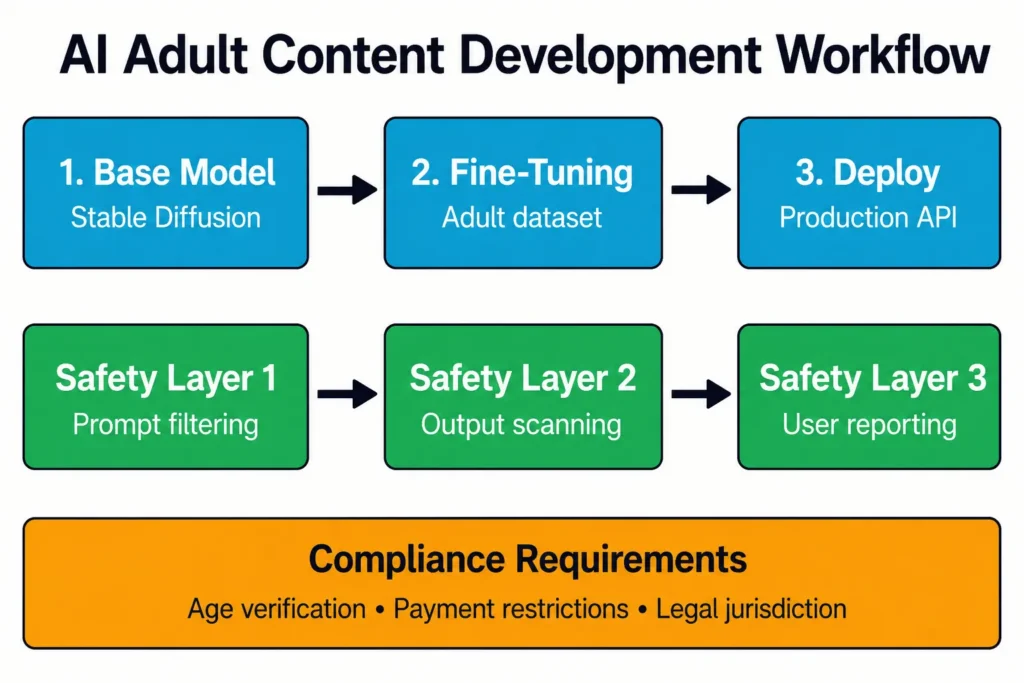
Los modelos estables basados en la difusión dominan el panorama técnico. Los desarrolladores suelen empezar con modelos básicos y luego los perfeccionan con conjuntos de datos de contenido para adultos.
El ajuste fino requiere importantes recursos computacionales: varias GPU de gama alta y días o semanas de entrenamiento. Los costes de computación en la nube pueden ascender a miles de dólares para un ajuste exhaustivo.
Los modelos de contenido para adultos preformados disponibles en plataformas como CivitAI ofrecen atajos, pero plantean cuestiones de derechos de autor y procedencia de los datos de formación.
Seguridad y filtrado de contenidos
La implantación de filtros de seguridad eficaces representa un reto técnico crítico. Los sistemas deben distinguir entre contenidos legales para adultos y material ilegal como el CSAM.
Los enfoques multicapa combinan el filtrado inmediato (bloqueo de términos prohibidos antes de la generación), la clasificación de los resultados (escaneo de las imágenes generadas en busca de contenidos prohibidos) y la revisión manual de los contenidos marcados.
Ningún sistema automatizado consigue una precisión perfecta. Los falsos positivos bloquean contenidos legítimos, mientras que los falsos negativos permiten que se cuele material prohibido.
Consideraciones jurídicas y de conformidad
Los desarrolladores que despliegan plataformas de IA para adultos deben cumplir requisitos de verificación de edad, problemas de responsabilidad por contenidos, restricciones en el procesamiento de pagos y normativas específicas de cada jurisdicción.
Muchos procesadores de pagos prohíben o restringen en gran medida las transacciones de contenidos para adultos, lo que limita las opciones de monetización. Los sistemas de verificación de la edad deben equilibrar el cumplimiento legal con la privacidad del usuario.
Trayectorias futuras y tendencias emergentes
¿Hacia dónde se dirige la pornografía con IA? Varias tendencias sugieren la trayectoria de esta tecnología en los próximos años.
Mayor realismo y contenido multimodal
La calidad de las imágenes sigue mejorando rápidamente. Los modelos lanzados en 2026 producen imágenes cada vez más difíciles de distinguir de las fotografías. La generación de vídeo -actualmente lenta y propensa a los artefactos- alcanzará probablemente un realismo similar en 1-2 años.
La IA multimodal que combina texto, imagen, audio y vídeo promete experiencias totalmente interactivas. Imagina compañeros de IA que respondan verbalmente al tiempo que generan contenidos visuales sincronizados en tiempo real.
Endurecimiento de la normativa
Se espera una regulación más exhaustiva a medida que los gobiernos reconozcan las implicaciones de la pornografía de la IA. Los marcos reguladores de la UE pueden servir de modelo para otras jurisdicciones.
Es probable que se amplíen los requisitos de verificación de la edad. Se definirán con mayor claridad los marcos de responsabilidad para las plataformas que alojen o generen contenidos ilegales.
Integración y normalización
Los contenidos para adultos generados por inteligencia artificial están pasando de ser una novedad tecnológica a ser aceptados por la mayoría. A medida que la tecnología se vuelve omnipresente, las actitudes sociales pueden cambiar, aunque persistirá un intenso debate.
La integración con plataformas de realidad virtual y realidad aumentada podría crear experiencias inmersivas mucho más allá de las capacidades actuales, lo que plantearía nuevas cuestiones éticas y psicológicas.
Alternativas y enfoques de reducción de daños
Para quienes se preocupan por las repercusiones de la pornografía anal, ¿qué alternativas o estrategias de reducción de daños existen?
Plataformas éticas de contenidos para adultos
Algunas plataformas tradicionales de contenidos para adultos hacen hincapié en la producción ética: remuneración justa de los artistas, documentación explícita del consentimiento y representación diversa. Estas plataformas se posicionan como alternativas tanto a la pornografía tradicional explotadora como a los contenidos generados por IA.
Usos terapéuticos y educativos
No todos los contenidos sexuales generados por IA tienen fines puramente consumistas. Algunos investigadores exploran aplicaciones terapéuticas: ayudar a las personas a explorar la sexualidad de forma segura, apoyar la educación sexual o ayudar a los discapacitados.
Estas aplicaciones se enfrentan a sus propias complejidades éticas, pero sugieren que el potencial de la IA va más allá de la pornografía comercial.
Alfabetización digital y compromiso crítico
Las iniciativas educativas que promueven la alfabetización en IA abordan cada vez más los medios sintéticos, incluida la pornografía. Comprender cómo se crean los contenidos de IA, reconocer sus limitaciones y desarrollar hábitos de consumo críticos representan factores de protección clave.
Especialmente en el caso de los jóvenes que se enfrentan a la pornografía con IA, los enfoques educativos que fomentan un sano escepticismo y la alfabetización mediática pueden reducir los daños potenciales.
Preguntas frecuentes
No. Las políticas de uso de ChatGPT prohíben explícitamente generar contenidos para adultos. OpenAI aplica estas restricciones mediante filtros técnicos y sistemas de supervisión. Incluso los suscriptores que pagan $20 mensuales por ChatGPT Plus se enfrentan a idénticas restricciones de contenido. Los intentos de eludir estos filtros mediante ingeniería rápida suelen fracasar, ya que los sistemas de seguridad son cada vez más sofisticados.
Varias categorías de herramientas de IA permiten contenidos para adultos: modelos de código abierto gestionados localmente como Stable Diffusion con entrenamiento personalizado, plataformas comunitarias como CivitAI que alojan modelos orientados a adultos, y servicios comerciales diseñados específicamente para la pornografía de IA como Candy.AI y SoulGen. Estas plataformas aplican sus propias políticas de contenidos que prohíben el material ilegal al tiempo que permiten contenidos legales para adultos. Los precios de los servicios comerciales varían según la plataforma, con opciones que oscilan aproximadamente entre $5,99 y $12,99 mensuales para los planes de suscripción.
La legalidad depende de la jurisdicción y de los contenidos específicos. En general, la pornografía generada por IA que muestra personajes adultos ficticios es legal en la mayoría de las jurisdicciones occidentales. Sin embargo, los deepfakes no consentidos que muestran a personas reales sin permiso están cada vez más penalizados, y el material de abuso sexual infantil generado por IA es ilegal en todo el mundo. Algunas jurisdicciones prohíben categorías específicas de contenido ficticio. Las leyes varían significativamente de un país a otro y evolucionan rápidamente a medida que los gobiernos responden a la tecnología.
Los actuales generadores de porno con IA producen imágenes estáticas de gran realismo, y las plataformas premium crean imágenes que pueden ser difíciles de distinguir de las fotografías. La calidad varía significativamente de una plataforma a otra: los servicios de primer nivel que utilizan arquitecturas de modelos recientes consiguen un realismo notable, mientras que las opciones más económicas tienen problemas con la precisión anatómica y los detalles coherentes. La generación de vídeo sigue siendo menos convincente y a menudo muestra artefactos, incoherencias y movimientos poco naturales, aunque la calidad mejora rápidamente. Es de esperar que dentro de uno o dos años se consigan vídeos casi fotorrealistas.
Entre las principales preocupaciones éticas se encuentran los deepfakes no consentidos que muestran a personas reales sin permiso (las investigaciones muestran que 96% de los deepfakes son pornográficos y 90% se dirigen a mujeres), la posibilidad de generar contenidos ilegales como material de abuso sexual infantil, el desplazamiento económico de los artistas adultos y los trabajadores del sexo, las violaciones de la privacidad por el uso no autorizado de la imagen, y las repercusiones psicológicas, incluido el potencial de adicción y las expectativas poco realistas de las relaciones. Los marcos reguladores luchan por seguir el ritmo de las capacidades tecnológicas.
La investigación sugiere que la pornografía de IA puede tener un potencial adictivo, potencialmente superior a la pornografía tradicional debido a la personalización ilimitada y la gratificación instantánea. La adicción a la pornografía de IA comparte características con otras adicciones conductuales: patrones de consumo crecientes, interferencia con el funcionamiento diario, consumo continuado a pesar de las consecuencias negativas y angustia psicológica cuando no se puede acceder al contenido. La perfecta personalización posible con los contenidos generados por IA puede intensificar los patrones de consumo compulsivo, aunque los estudios exhaustivos a largo plazo siguen siendo limitados.
Las plataformas legítimas aplican sistemas de seguridad multicapa que combinan un filtrado inmediato que bloquea los términos prohibidos antes de la generación de imágenes, una clasificación automática de los resultados que escanea los contenidos generados en busca de material ilegal, un cotejo de hash con bases de datos CSAM conocidas, mecanismos de notificación por parte de los usuarios y una revisión manual de los contenidos marcados. Los enfoques técnicos incluyen el entrenamiento de clasificadores para detectar categorías específicas de contenidos prohibidos y el mantenimiento de bases de datos de conceptos prohibidos. Ningún sistema alcanza una precisión perfecta: equilibrar los falsos positivos que censuran en exceso con los falsos negativos que pasan por alto contenidos prohibidos sigue siendo un reto permanente.
Conclusión
La pregunta “¿qué IA permite el porno?” revela un panorama tecnológico dividido entre la restricción y la permisividad. Las principales plataformas, como OpenAI, Anthropic y Google, mantienen prohibiciones exhaustivas basadas en políticas de seguridad y protección de marca.
Mientras tanto, prospera un ecosistema paralelo: modelos de código abierto desplegados sin restricciones, plataformas comunitarias que alojan variantes orientadas a adultos y servicios comerciales que comercializan explícitamente la generación de pornografía por IA. Estas plataformas operan en un complejo territorio legal y ético, equilibrando la demanda de los usuarios con las preocupaciones sociales sobre el consentimiento, la seguridad de los niños y el desplazamiento de los trabajadores.
La tecnología en sí sigue siendo neutral. Sus aplicaciones reflejan decisiones humanas sobre usos aceptables, barreras de seguridad adecuadas y valores contrapuestos en torno a la expresión sexual, la privacidad y la prevención de daños.
A medida que avancen las capacidades de la IA, cabe esperar una tensión constante entre quienes buscan un acceso sin restricciones a las herramientas generativas y quienes abogan por restricciones exhaustivas. Los marcos normativos seguirán evolucionando, aunque probablemente a la zaga del desarrollo tecnológico.
Para las personas que navegan por este panorama -ya sea como desarrolladores, usuarios o ciudadanos preocupados- resulta esencial comprender las realidades técnicas, las implicaciones éticas y los marcos jurídicos. La intersección de la IA y la pornografía plantea profundas cuestiones sobre el papel de la tecnología en la sexualidad humana, cuestiones que la sociedad apenas está empezando a abordar seriamente.
Compruebe las fuentes autorizadas y las políticas actuales de la plataforma antes de utilizar cualquier herramienta de IA para la generación de contenidos para adultos. Las leyes, las condiciones de servicio y las capacidades técnicas cambian con frecuencia en este espacio en rápida evolución.
Deja una respuesta